As Connecticut remains to browse the waves of financial development, it's becoming increasingly clear that innovation plays a crucial role in sustaining growth and competition. What is Fueling Connecticut's Economic Growth? Discover the Top Industries Gaining the Incentives of 3D Laser Scanning Technology! . Amongst the various technological advancements, 3D laser scanning technology has become a transformative force across several sectors within the state. This essay supplies a review of 3D laser scanning technology and highlights the leading industries in Connecticut reaping its benefits.
3D laser scanning, additionally called LiDAR (Light Detection and Ranging), is a non-contact, non-destructive technology that digitally records the form of physical items using a line of laser light. This technology develops "" point clouds"" of information from the surface area of an object. Essentially, 3D laser scanners gauge fine details and capture free-form forms to quickly generate very exact point clouds. It is extensively concerned for its accuracy, speed, and convenience.
In Connecticut, the aerospace industry stands as a key recipient of 3D laser scanning technology. The state is home to a considerable number of aerospace makers who count on the severe accuracy of 3D laser scanning to develop components that meet strenuous security and high quality standards. The modern technology allows rapid prototyping, quality control, and the capability to reverse-engineer parts with complex geometries, thus lowering time-to-market for new advancements.
The building and design fields additionally substantially gain from 3D laser scanning. In a state with a rich tapestry of historic buildings and modern facilities, maintaining and refurbishing frameworks requires meticulous preparation and execution. 3D laser scanning provides architects and engineers with detailed versions of existing frameworks, allowing for precise refurbishments and making sure new enhancements blend perfectly with the old. Additionally, it helps with the tracking of building tasks, ensuring that they remain on track and within spending plan.
An additional industry reaping the benefits is manufacturing. Connecticut's manufacturing field, which includes clinical tool production, vehicle, and commercial equipment, utilizes 3D laser scanning to enhance their layout processes, improve quality assurance, and enhance their supply chains. The innovation's capacity to quickly capture and analyze complex sizes and shapes enables better quality control and a much more effective manufacturing procedure.
Marine market in Connecticut likewise utilizes 3D laser scanning to layout and manufacture boats and ship parts, making certain precision and safety in a market where there is little margin for mistake. This innovation is particularly useful for retrofitting ships, as it can properly capture the complex forms and tight rooms of a ship's inside, which are often challenging to measure with traditional techniques.
In ecological administration and planning
The Aerospace Sector: Accuracy and Efficiency with 3D Scanning
Connecticut's economic landscape is a vivid tapestry of development and assiduity, with the aerospace industry skyrocketing as a considerable player. Amongst the technical marvels driving this sector to new heights is the arrival of 3D laser scanning technology, a device that embodies the future of accuracy engineering and manufacturing.
In the heart of the Constitution State, aerospace companies are not just making components; they are crafting masterpieces of engineering that need to follow the strictest requirements of top quality and precision. The risks are high, as also the tiniest inconsistency can endanger the safety and security and performance of an airplane. This is where 3D laser scanning technology ends up being vital.
3D scanning has transformed just how aerospace firms approach the design, prototyping, and manufacturing procedures. With the capability to catch the geometry of objects with impressive precision, engineers can create digital reproductions of parts, settings up, and even whole aircraft with a level of information that was formerly unattainable. These digital models are after that made use of for a myriad of objectives, from reverse engineering tradition parts to carrying out limited element evaluations and aerodynamic simulations.
The benefits of 3D scanning in aerospace reach quality control also. Checking the parts produced, comparing them against the initial CAD layouts, or checking the fit of put together areas can be achieved with rate and precision that manual methods can not match. This not just guarantees that every piece meets the sector's strenuous requirements yet likewise substantially decreases the time and cost associated with the trial-and-error of model development.
Additionally, the innovation has a lasting side. By optimizing designs for product efficiency and helping with the fixing and repair of parts rather than substitute, 3D scanning supports an extra lasting manufacturing cycle. This lines up with an expanding awareness in the direction of ecological obligation in the aerospace industry.
The causal sequences of these advancements in 3D scanning technology prolong beyond the aerospace industry, affecting other top industries in Connecticut. From medical gadget manufacturing, where accuracy can impact person end results, to the marine market, where hull layouts take advantage of the detailed scans to boost performance and safety and security, 3D laser scanning is a cornerstone in the state's financial advancement.
Finally, 3D laser scanning technology is a foundation of advancement within Connecticut's aerospace industry, driving financial growth with its assurance of precision, effectiveness, and sustainability. As the state remains to embrace and integrate these advanced modern technologies, it stands positioned to maintain its credibility as a center of industrial prowess and economic
In the evolving landscape of Connecticut's economic situation, the combination of 3D laser scanning technology is having a transformative impact on several sectors, acting as a driver for sustained financial growth. This modern technology catches thorough three-dimensional details concerning physical items, environments, and complex geometries in a fraction of the moment it takes with conventional approaches, making it possible for accuracy and efficiency that were as soon as unimaginable.
The building and construction and style industries go to the center of this technological revolution. 3D laser scanning enhances design and structure processes by supplying exact dimensions and producing detailed digital models. It successfully minimizes the moment spent on hand-operated surveys and reduces human mistake, which converts to significant expense savings and sped up task timelines. In Connecticut, where city renewal and infrastructure development are recurring, the capability to swiftly and precisely analyze existing problems is invaluable. For example, in the improvement of historic buildings, laser scanning protects building stability while offering a clear path for innovation.
Besides building and design, various other sectors in Connecticut are also profiting of 3D laser scanning technology. The production sector, particularly aerospace and defense, utilizes laser scanning for quality control, reverse engineering, and the rapid prototyping of complex components. By making certain parts are developed to exact requirements, Connecticut's suppliers can maintain an one-upmanship in the global market.
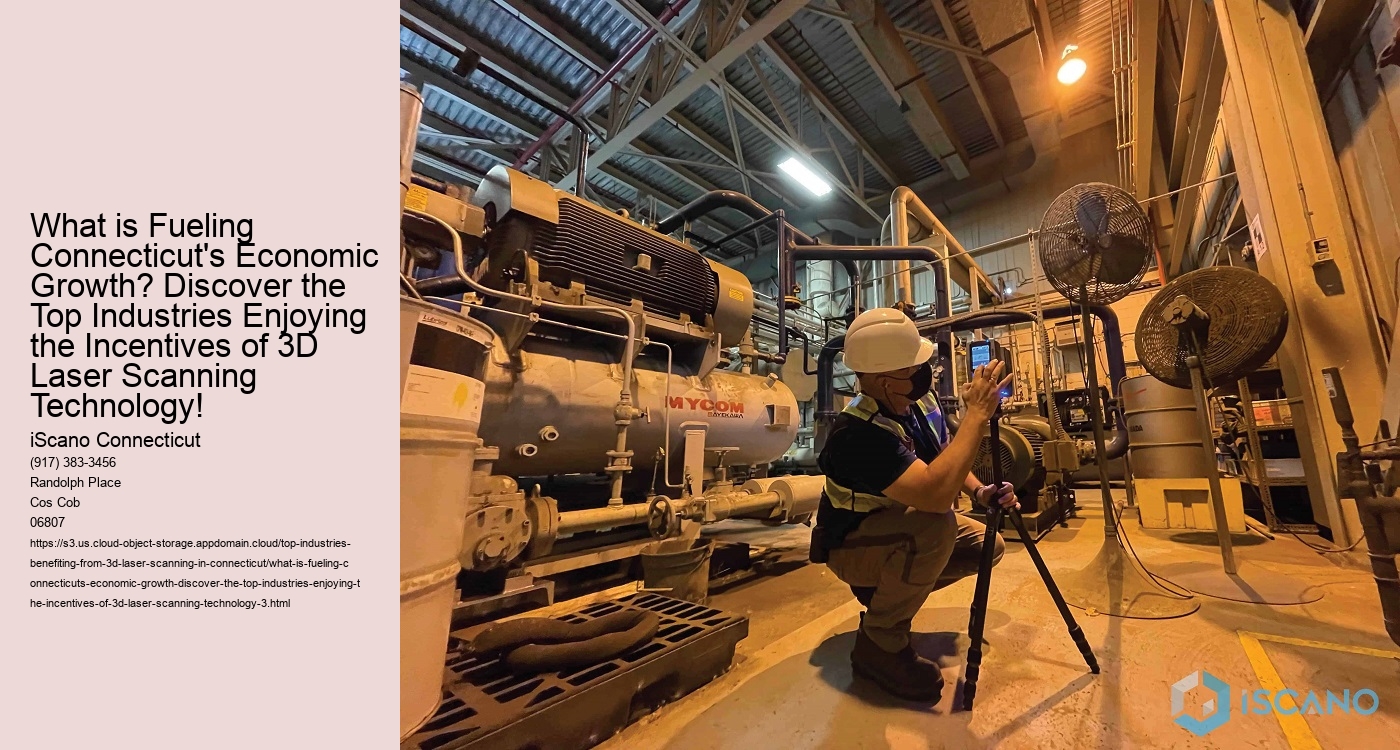
The energy market, consisting of nuclear and renewable energy industries, uses 3D laser scanning for facility maintenance, retrofitting, and upgrading aging framework. This technology boosts safety and security by allowing remote inspection of hazardous locations and makes sure governing compliance by giving extensive paperwork for audits.
In addition, the heritage and historical areas leverage laser scanning to file and preserve Connecticut's rich historical sites. This non-invasive approach enables the digital preservation of artefacts and landmarks, making certain that they can be researched and valued for generations to find.
In the realm of public safety and forensics, 3D laser scanning is a powerful device for criminal offense scene examination and accident reconstruction. By producing accurate models of crime scenes, law enforcement can assess cases better and existing compelling aesthetic evidence in court process.
Overall, the combination of 3D laser scanning technology is a testimony to Connecticut's dedication to development and economic growth. By embracing these developments, the state is not only enhancing the efficiency and precision of its sectors however is likewise ensuring that it remains at the reducing side of technical advancement. As industries remain to harness the power of 3D laser scanning, Connecticut is poised to experience a new age of prosperity, marked by enhanced efficiency and sustainability
Connecticut's financial advancement is a diverse trip, driven by advancement, efficiency, and the relentless pursuit of high quality. At the heart of this journey is the manufacturing sector, an important gear in the state's economic engine that has actually been enjoying the transformative advantages of 3D laser scanning technology. This essay discovers exactly how this cutting-edge technology is improving product development and quality control, consequently sustaining Connecticut's financial development.
3D laser scanning technology has become a game-changer for Connecticut's suppliers. By enabling specific dimension and inspection of components and settings up, it has actually opened brand-new levels of accuracy and detail that were formerly unattainable. This technology records the shape of physical items making use of a line of laser light, developing electronic 3D representations that can be used for a myriad of applications, from reverse engineering to quality assurance.
In the realm of product development, 3D laser scanning speeds up the layout process, making it possible for engineers to rapidly prototype and refine their concepts. For Connecticut's aerospace and shipbuilding industries, this indicates that complex components can be designed and checked with unmatched rate and accuracy. As the state is home to leading producers like Pratt & & Whitney and Electric Watercraft, the ability to swiftly repeat and best layouts is not just a matter of efficiency, yet likewise of keeping a competitive edge in global markets.
Furthermore, 3D laser scanning enhances quality control procedures by providing extensive data on manufactured parts. This allows for early detection of disparities and prevents pricey manufacturing errors. As a result, Connecticut's producers can assure that the products they deliver meet the most strict top quality requirements, a requirement for industries where safety and security is critical, such as clinical tools and protection.
Beyond boosting individual companies, the fostering of 3D laser scanning technology has wider financial ramifications. It cultivates a society of technology that attracts skill and financial investment, creating a virtuous cycle of development and development. As even more companies adopt this technology, the neighborhood supply chain becomes a lot more robust, and the labor force extra knowledgeable, more strengthening Connecticut's online reputation as a hub of manufacturing excellence.
Additionally, the ecological effect of production is minimized with the use of 3D laser scanning. Improved precision and minimized product waste contribute to more lasting manufacturing methods, straightening with the state's goals of ecological stewardship and accountable economic development.
To conclude, 3D laser scanning technology is a cornerstone of contemporary manufacturing, giving Connecticut's industries with the devices they need to grow in a competitive international economic climate. By improving product development and quality control, this
In the charming New England state of Connecticut, where history whispers from every colonial village and factory community, the blend of historical preservation and archaeology with contemporary technology is not just an academic workout-- it's an essential element of the state's financial advancement. At the forefront of this intersection is making use of 3D laser scanning technology, a tool that is reshaping the way Connecticut protects its past while protecting its future.
Envision going through the rock roads of Mystic Port, where the maritime heritage of Connecticut comes to life. Now, picture a group of professionals outfitted with 3D laser scanners carefully recording every information of the historic vessels and buildings. This cutting-edge technology enables the development of exact electronic reproductions, protecting the detailed craftsmanship of bygone eras for posterity. These electronic archives serve as vital referrals for restoration projects, ensuring that any type of repair services or restorations preserve the authenticity of the initial structures.
Past preservation, 3D laser scanning has ended up being a foundation in Connecticut's archaeology initiatives. Archaeologists, when reliant on meticulous manual measurements, now use this technology to promptly and precisely record excavation sites. The precision and speed of 3D scanning not only boost the cataloging of artifacts yet also reduce the disruption to the sites, which is especially important in areas of cultural significance. With the production of virtual site models, researchers worldwide can explore Connecticut's historical treasures without ever before entering the state, widening the reach of its historic narrative.
The financial effects of these applications are extensive. As Connecticut's archaeological sites attract visitors from around the world, the boosted preservation and presentation of these destinations straight translate into boosted site visitor costs, strengthening regional businesses and sustaining jobs in the friendliness and service sectors. In addition, the information gathered via 3D scanning can be repurposed for instructional products, interactive exhibits, and even virtual reality experiences, opening new income streams in the technology and imaginative fields.
Additionally, 3D laser scanning technology is not constrained to the realms of background and archaeology. Connecticut's production industry, specifically aerospace and protection, reaps the benefits of this precision tool for quality control, reverse engineering, and product development. The versatility of 3D laser scanning sustains the state's credibility as a center for technology and manufacturing quality.
As Connecticut remains to embrace the capacity of 3D laser scanning, the ramifications for financial advancement are significant. By preserving the past with such contemporary ways, the state not just honors its abundant heritage yet also promotes a forward
In the wake of a rapidly evolving technical landscape, the significance of aligning education and learning and labor force training with the demands of a tech-driven economic climate can not be overemphasized. Connecticut, a state known for its rich background of technology and production, stands at the cusp of a new era in economic development, spurred by the advent of 3D laser scanning technology. This technology is not simply a device; it is an entrance to a future where precision, effectiveness, and technology are the characteristics of leading markets.
At the heart of this makeover is the requirement for a workforce that is not just tech-savvy but additionally experienced at leveraging the capabilities of sophisticated technologies such as 3D laser scanning. Education and learning systems from K-12 to higher education organizations are hence entrusted with a critical duty: to prepare pupils for a workforce that demands a brand-new kind of proficiency in digital devices and data analysis.
3D laser scanning, which develops digital replicas of physical items and settings via using laser light, is changing industries throughout the board. In Connecticut, fields such as aerospace, shipbuilding, architecture, and building and construction are profiting of this innovation. By integrating 3D laser scanning right into their operations, companies can considerably improve precision and decrease the time needed for procedures like prototyping, quality control, and reverse engineering.
For instance, in aerospace, where precision is paramount, 3D laser scanning makes certain that components and settings up fulfill rigorous specs. Shipbuilding gain from the innovation by streamlining the retrofitting and repair work of maritime vessels. In architecture, laser scanning help in the exact documentation and remodeling of frameworks, while in building and construction, it improves the preparation process and surveillance of development on work websites.
To receive Connecticut's financial growth in these leading industries, there is a blossoming need for experts who excel in 3D laser scanning technology. Curriculum designed around this demand are emerging as a top priority. Area colleges and technical institutions are establishing specialized educational programs that use hands-on experience with 3D laser scanning equipment. Colleges are incorporating the innovation right into engineering and style programs, making sure that grads are industry-ready.
Additionally, workforce training initiatives are critical in upskilling present staff members to link the technology gap. Collaborations in between sector and schools are assisting in the development of certification programs and continuing education programs customized to the details of 3D laser scanning applications.
To conclude, as Connecticut continues to harness the power of 3D laser scanning technology for economic advancement, the synergy between education and learning and workforce training ends up being
In the world of technical improvement, 3D laser scanning has emerged as a transformative force throughout numerous markets, adding considerably to Connecticut's economic development. As we seek to the future, the prospective growth of this technology in the state is substantial, but not without its challenges.
Connecticut's economic landscape is diverse, with markets ranging from aerospace and protection to insurance coverage and finance. Nonetheless, some sectors have been especially experienced at leveraging the advantages of 3D laser scanning.
Aerospace and protection, as an example, have actually utilized 3D laser scanning for accuracy production and quality control, making sure that parts fulfill rigid specs. This modern technology has actually been crucial in lowering production mistakes and enhancing safety and security, which are paramount in this field. As aerospace companies remain to innovate, the demand for much more exact and much faster scanning solutions is likely to stimulate development in the 3D laser scanning market.
In a similar way, the construction and design industries in Connecticut have actually seen considerable gain from integrating 3D laser scanning right into their workflows. With its ability to swiftly and precisely record the dimensions of complicated frameworks, 3D scanning has transformed the way buildings are created, constructed, and maintained. This effectiveness gain not just causes set you back financial savings yet likewise improves the capacity for lasting development techniques by minimizing waste and maximizing source usage.
The historic conservation market also stands to take advantage of the development of 3D laser scanning. Connecticut, with its abundant heritage and numerous historic landmarks, can use this technology to carefully record and protect its historical structures. High-resolution scans give a thorough record that can be utilized for reconstruction and educational functions, making certain that the state's history is protected for future generations.
However, the future overview for 3D laser scanning in Connecticut is not without obstacles. Among the primary difficulties is the price of the technology. Although rates have been reducing, the first financial investment for top notch 3D scanners can still be excessive for little to medium-sized business. To sustain economic development, it is essential for local services to have accessibility to budget-friendly scanning options, which might require assistance from state initiatives or public-private collaborations.
An additional difficulty lies in the schedule of skilled employees. The advanced nature of 3D laser scanning requires a labor force that is not just practically efficient yet also with the ability of interpreting and making use of the data properly. Investment in education and learning and training programs is important in building a talent swimming pool that can drive the technology's fostering and development.
Furthermore, problems associated with data management, such as storage, safety and security, and privacy, must be
See also: Connecticut State Board of Education
Hartford Public High School (1638) is the third-oldest secondary school in the nation after the Collegiate School (1628) in Manhattan and the Boston Latin School (1635). Today, the Connecticut State Board of Education manages the public school system for children in grades K–12. Board of Education members are appointed by the Governor of Connecticut.
University of Connecticut, the state's main public university
Connecticut has a number of private schools. Private schools may file for approval by the state Department of Education, but are not required to. Per state law, private schools must file yearly attendance reports with the state.[233]
Notable private schools include Choate Rosemary Hall, The Hotchkiss School, Loomis Chaffee School, and Taft School.
See also: List of colleges and universities in Connecticut
Connecticut was home to the nation's first law school, Litchfield Law School, which operated from 1773 to 1833 in Litchfield. Well known universities in the state include Yale University, Wesleyan University, Trinity College, Sacred Heart University, Fairfield University, Quinnipiac University, and the University of Connecticut. The Connecticut State University System includes 4 state universities, and the state also has 12 community colleges. The United States Coast Guard Academy is located in New London.
iScano prioritizes continuous learning and invests in staying updated with the latest advancements in laser scanning technology to provide cutting-edge services.
Absolutely, iScano's laser scanning services provide valuable data for facility management, aiding in maintenance, planning, and renovations.
Yes, iScano Connecticut can assist in creating digital archives for architectural projects, preserving design iterations and enabling future reference and analysis.
iScano's laser scanners are designed to capture both indoor and outdoor environments effectively, providing a comprehensive scanning solution.
