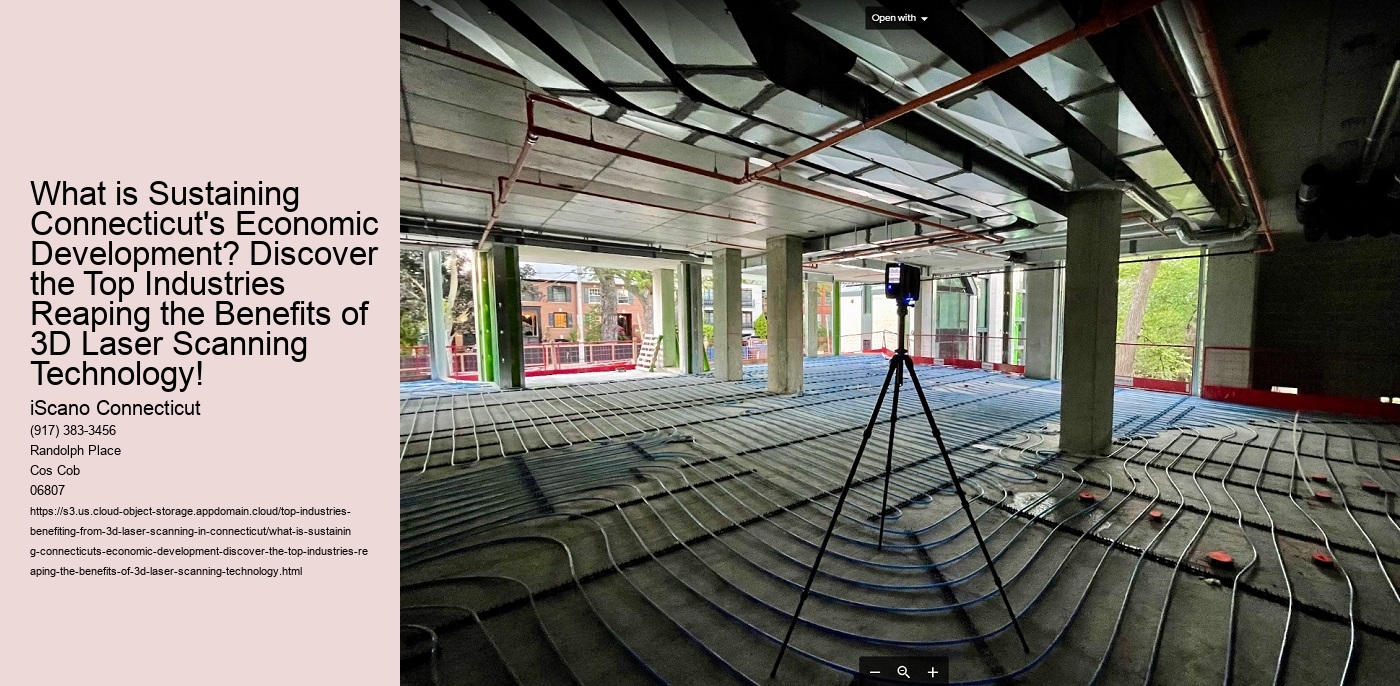
As Connecticut remains to navigate the waves of financial advancement, it's ending up being progressively clear that innovation plays a crucial role in sustaining growth and competitiveness. What is Sustaining Connecticut's Economic Development? Discover the Top Industries Reaping the Benefits of 3D Laser Scanning Technology! . Among the different technological advancements, 3D laser scanning technology has become a transformative pressure across numerous markets within the state. This essay supplies a summary of 3D laser scanning technology and highlights the top industries in Connecticut gaining its advantages.
3D laser scanning, likewise known as LiDAR (Light Detection and Ranging), is a non-contact, non-destructive innovation that digitally captures the shape of physical objects utilizing a line of laser light. This innovation develops "" factor clouds"" of information from the surface area of a things. Fundamentally, 3D laser scanners gauge great information and capture free-form forms to quickly generate extremely exact factor clouds. It is extensively pertained to for its accuracy, speed, and flexibility.
In Connecticut, the aerospace market stands as a main recipient of 3D laser scanning technology. The state is home to a substantial number of aerospace manufacturers that count on the severe precision of 3D laser scanning to create components that meet rigorous safety and security and quality requirements. The modern technology allows rapid prototyping, quality control, and the capability to reverse-engineer get rid of complex geometries, hence reducing time-to-market for new innovations.
The building and construction and design fields likewise greatly take advantage of 3D laser scanning. In a state with an abundant tapestry of historic buildings and modern framework, maintaining and refurbishing frameworks needs thorough preparation and implementation. 3D laser scanning gives engineers and engineers with in-depth designs of existing structures, permitting accurate repairs and making sure brand-new additions mix effortlessly with the old. In addition, it promotes the tracking of building and construction jobs, making sure that they remain on track and within budget.
An additional sector reaping the benefits is manufacturing. Connecticut's production sector, that includes medical gadget manufacturing, vehicle, and industrial machinery, makes use of 3D laser scanning to optimize their design procedures, improve quality assurance, and simplify their supply chains. The innovation's ability to swiftly catch and examine complex sizes and shapes permits better quality control and a more effective production process.
Marine market in Connecticut also utilizes 3D laser scanning to style and manufacture watercrafts and ship components, guaranteeing accuracy and safety and security in a market where there is little margin for error. This technology is particularly useful for retrofitting ships, as it can precisely record the complicated forms and tight spaces of a ship's inside, which are frequently challenging to gauge with typical techniques.
In ecological management and planning
The Aerospace Industry: Precision and Performance with 3D Scanning
Connecticut's economic landscape is a vibrant tapestry of technology and assiduity, with the aerospace market soaring as a considerable player. Amongst the technical wonders propelling this sector to new heights is the development of 3D laser scanning technology, a tool that symbolizes the future of accuracy engineering and production.
In the heart of the Constitution State, aerospace companies are not simply manufacturing elements; they are crafting masterpieces of engineering that must follow the most strict requirements of top quality and accuracy. The stakes are high, as also the smallest inconsistency can compromise the safety and capability of an aircraft. This is where 3D laser scanning technology comes to be indispensable.
3D scanning has changed exactly how aerospace companies approach the layout, prototyping, and production procedures. With the ability to record the geometry of objects with breathtaking precision, designers can create digital reproductions of elements, assemblies, and also entire airplane with a level of information that was previously unattainable. These digital models are after that made use of for a myriad of objectives, from reverse engineering tradition components to carrying out limited aspect evaluations and aerodynamic simulations.
The benefits of 3D scanning in aerospace reach quality control as well. Checking the parts generated, comparing them against the initial CAD styles, or inspecting the fit of assembled areas can be achieved with speed and precision that hands-on techniques can not match. This not only ensures that every item fulfills the sector's extensive requirements however also dramatically decreases the moment and expense related to the trial-and-error of model growth.
In addition, the modern technology has a lasting edge. By maximizing styles for product efficiency and helping with the fixing and repair of components as opposed to substitute, 3D scanning supports an extra lasting production cycle. This lines up with an expanding consciousness in the direction of environmental duty in the aerospace sector.
The causal sequences of these innovations in 3D scanning technology expand beyond the aerospace industry, affecting other top markets in Connecticut. From clinical gadget manufacturing, where accuracy can influence patient outcomes, to the aquatic market, where hull layouts take advantage of the detailed scans to improve performance and safety, 3D laser scanning is a linchpin in the state's economic development.
Finally, 3D laser scanning technology is a cornerstone of technology within Connecticut's aerospace industry, driving financial development with its promise of precision, effectiveness, and sustainability. As the state remains to accept and incorporate these innovative innovations, it stands positioned to maintain its online reputation as a center of industrial expertise and financial
In the developing landscape of Connecticut's economy, the assimilation of 3D laser scanning technology is having a transformative effect on multiple markets, working as a driver for sustained financial growth. This cutting edge technology catches thorough three-dimensional information regarding physical objects, settings, and intricate geometries in a fraction of the time it takes with conventional techniques, enabling precision and efficiency that were once unimaginable.
The building and construction and style fields are at the center of this technological transformation. 3D laser scanning enhances layout and structure procedures by providing precise dimensions and developing thorough digital models. It effectively lowers the moment spent on hand-operated surveys and minimizes human mistake, which translates to significant price savings and increased job timelines. In Connecticut, where metropolitan revival and facilities growth are ongoing, the capability to promptly and precisely examine existing problems is vital. As an example, in the remodelling of historical structures, laser scanning maintains architectural honesty while supplying a clear path for modernization.
In addition to construction and architecture, other sectors in Connecticut are also reaping the benefits of 3D laser scanning technology. The manufacturing sector, specifically aerospace and protection, utilizes laser scanning for quality control, reverse engineering, and the rapid prototyping of complicated components. By ensuring elements are constructed to precise requirements, Connecticut's manufacturers can preserve a competitive edge in the international market.
The energy market, consisting of nuclear and renewable energy sectors, uses 3D laser scanning for center upkeep, retrofitting, and upgrading aging facilities. This technology enhances safety and security by allowing remote evaluation of dangerous locations and makes sure regulative conformity by offering complete documentation for audits.
Additionally, the heritage and historical fields utilize laser scanning to record and protect Connecticut's rich archaeological sites. This non-invasive method permits the digital conservation of artifacts and sites, ensuring that they can be studied and appreciated for generations to come.
In the realm of public safety and forensics, 3D laser scanning is a powerful device for crime scene investigation and accident reconstruction. By developing specific versions of crime scenes, law enforcement can analyze events better and existing engaging visual evidence in court procedures.
Overall, the integration of 3D laser scanning technology is a testimony to Connecticut's dedication to advancement and economic development. By welcoming these developments, the state is not just boosting the effectiveness and accuracy of its sectors however is also guaranteeing that it stays at the reducing side of technical development. As industries remain to harness the power of 3D laser scanning, Connecticut is poised to experience a new age of prosperity, marked by improved performance and sustainability
Connecticut's economic advancement is a multifaceted trip, driven by development, efficiency, and the relentless quest of high quality. At the heart of this trip is the manufacturing field, a crucial gear in the state's economic engine that has actually been enjoying the transformative benefits of 3D laser scanning technology. This essay checks out exactly how this cutting-edge technology is enhancing product development and quality control, thus sustaining Connecticut's economic development.
3D laser scanning technology has actually emerged as a game-changer for Connecticut's suppliers. By permitting exact measurement and evaluation of parts and assemblies, it has unlocked brand-new degrees of precision and detail that were formerly unattainable. This modern technology captures the shape of physical items making use of a line of laser light, creating electronic 3D depictions that can be made use of for a myriad of applications, from reverse engineering to quality assurance.
In the realm of product development, 3D laser scanning speeds up the layout process, enabling engineers to rapidly model and refine their ideas. For Connecticut's aerospace and shipbuilding markets, this implies that complex parts can be made and checked with extraordinary speed and accuracy. As the state is home to leading manufacturers like Pratt & & Whitney and Electric Boat, the ability to rapidly repeat and ideal styles is not just an issue of efficiency, yet additionally of maintaining a competitive edge in international markets.
In addition, 3D laser scanning improves quality control procedures by providing comprehensive data on made elements. This allows for very early detection of discrepancies and protects against pricey manufacturing errors. Consequently, Connecticut's makers can ensure that the items they supply meet the most strict quality criteria, a necessity for sectors where safety is vital, such as clinical devices and protection.
Past improving private services, the fostering of 3D laser scanning technology has wider economic implications. It promotes a culture of innovation that attracts skill and investment, developing a virtuous cycle of development and development. As even more companies embrace this technology, the local supply chain becomes extra durable, and the labor force more proficient, additional solidifying Connecticut's online reputation as a center of producing quality.
Furthermore, the ecological impact of manufacturing is minimized through making use of 3D laser scanning. Boosted precision and lowered material waste contribute to more lasting production practices, straightening with the state's goals of environmental stewardship and responsible economic growth.
In conclusion, 3D laser scanning technology is a keystone of modern manufacturing, providing Connecticut's sectors with the devices they require to grow in an affordable global economic climate. By enhancing product development and quality control, this
In the lovely New England state of Connecticut, where background whispers from every colonial village and manufacturing facility town, the combination of historic conservation and archaeology with modern-day innovation is not just an academic workout-- it's an essential component of the state's financial advancement. At the leading edge of this junction is using 3D laser scanning technology, a device that is reshaping the means Connecticut safeguards its past while securing its future.
Imagine going through the cobblestone roads of Mystic Port, where the maritime heritage of Connecticut revives. Now, image a group of experts equipped with 3D laser scanners thoroughly capturing every information of the historical vessels and structures. This cutting-edge technology allows for the creation of specific digital replicas, preserving the complex workmanship of past ages for posterity. These electronic archives work as essential referrals for reconstruction projects, ensuring that any type of fixings or reconstructions keep the authenticity of the original frameworks.
Past conservation, 3D laser scanning has actually come to be a keystone in Connecticut's archaeology efforts. Archaeologists, once reliant on painstaking manual dimensions, currently utilize this modern technology to quickly and accurately document excavation websites. The accuracy and speed of 3D scanning not just improve the cataloging of artefacts but also minimize the disturbance to the sites, which is specifically vital in locations of cultural significance. Through the development of virtual website designs, researchers worldwide can explore Connecticut's archaeological treasures without ever before setting foot in the state, widening the reach of its historical narrative.
The financial implications of these applications are extensive. As Connecticut's archaeological sites draw visitors from across the globe, the improved preservation and presentation of these tourist attractions directly equate into raised visitor costs, reinforcing neighborhood businesses and sustaining work in the friendliness and service markets. Furthermore, the information gathered through 3D scanning can be repurposed for instructional materials, interactive displays, and also virtual reality experiences, opening up new profits streams in the innovation and creative industries.
Additionally, 3D laser scanning technology is not restricted to the worlds of background and archaeology. Connecticut's production market, particularly aerospace and protection, reaps the benefits of this accuracy device for quality control, reverse engineering, and product development. The adaptability of 3D laser scanning supports the state's online reputation as a hub for advancement and production quality.
As Connecticut continues to accept the potential of 3D laser scanning, the implications for economic development are substantial. By preserving the past with such contemporary means, the state not only honors its rich heritage however likewise promotes an ahead
Following a rapidly progressing technical landscape, the relevance of straightening education and learning and workforce training with the requirements of a tech-driven economic climate can not be overemphasized. Connecticut, a state known for its rich background of advancement and manufacturing, stands at the cusp of a new age in financial development, stimulated by the introduction of 3D laser scanning technology. This innovation is not simply a device; it is a gateway to a future where precision, efficiency, and development are the characteristics of leading markets.
At the heart of this makeover is the requirement for a labor force that is not only tech-savvy but additionally adept at leveraging the abilities of innovative innovations such as 3D laser scanning. Education and learning systems from K-12 to college organizations are thus tasked with a critical duty: to prepare trainees for a labor force that requires a brand-new kind of proficiency in digital devices and data analysis.
3D laser scanning, which creates digital reproductions of physical objects and atmospheres with making use of laser light, is changing industries across the board. In Connecticut, markets such as aerospace, shipbuilding, design, and construction are profiting of this innovation. By integrating 3D laser scanning into their process, companies can significantly boost accuracy and lower the time needed for processes like prototyping, quality control, and reverse engineering.
As an example, in aerospace, where accuracy is extremely important, 3D laser scanning ensures that components and assemblies meet stringent specs. Shipbuilding gain from the innovation by enhancing the retrofitting and repair work of maritime vessels. In design, laser scanning aids in the exact paperwork and remodeling of frameworks, while in construction, it boosts the planning process and surveillance of development on work websites.
To suffer Connecticut's financial advancement in these leading sectors, there is a blossoming demand for specialists that are proficient in 3D laser scanning technology. Curriculum designed around this need are emerging as a top priority. Neighborhood universities and technical institutions are creating specialized curricula that supply hands-on experience with 3D laser scanning devices. Universities are including the technology into design and style programs, guaranteeing that grads are industry-ready.
Additionally, labor force training initiatives are crucial in upskilling current employees to connect the tech gap. Collaborations between industry and schools are promoting the development of qualification programs and proceeding education courses customized to the intricacies of 3D laser scanning applications.
In conclusion, as Connecticut continues to harness the power of 3D laser scanning technology for financial growth, the synergy between education and learning and workforce training comes to be
In the world of technical development, 3D laser scanning has actually emerged as a transformative force across different sectors, adding considerably to Connecticut's economic growth. As we aim to the future, the prospective development of this innovation in the state is significant, yet not without its difficulties.
Connecticut's economic landscape varies, with industries ranging from aerospace and protection to insurance coverage and money. Nevertheless, some sectors have been specifically skilled at leveraging the advantages of 3D laser scanning.
Aerospace and protection, for example, have actually utilized 3D laser scanning for accuracy production and quality control, making certain that parts satisfy rigorous specifications. This modern technology has actually been crucial in minimizing manufacturing mistakes and enhancing safety, which are paramount in this field. As aerospace companies remain to introduce, the demand for even more exact and much faster scanning solutions is likely to spur growth in the 3D laser scanning market.
Similarly, the building and construction and style sectors in Connecticut have actually seen substantial benefits from integrating 3D laser scanning into their workflows. With its capacity to swiftly and accurately record the measurements of complex frameworks, 3D scanning has actually transformed the means buildings are created, built, and preserved. This effectiveness gain not just causes set you back financial savings but likewise enhances the possibility for sustainable development methods by decreasing waste and enhancing resource use.
The historical preservation industry also stands to gain from the growth of 3D laser scanning. Connecticut, with its abundant heritage and countless historical spots, can utilize this technology to thoroughly record and protect its historic structures. High-resolution scans offer a thorough document that can be made use of for restoration and instructional functions, making certain that the state's history is secured for future generations.
Nevertheless, the future overview for 3D laser scanning in Connecticut is not without challenges. One of the key hurdles is the price of the technology. Although rates have actually been decreasing, the initial financial investment for top quality 3D scanners can still be prohibitive for tiny to medium-sized business. To maintain economic growth, it is essential for regional services to have access to budget-friendly scanning remedies, which might necessitate assistance from state initiatives or public-private partnerships.
An additional difficulty lies in the availability of proficient employees. The advanced nature of 3D laser scanning calls for a workforce that is not just practically proficient but also efficient in interpreting and making use of the data properly. Financial investment in education and training programs is vital in constructing an ability swimming pool that can drive the innovation's fostering and development.
In addition, concerns associated with data management, such as storage space, safety and security, and personal privacy, should be
Statewide bus service is supplied by Connecticut Transit, owned by the Connecticut Department of Transportation, with smaller municipal authorities providing local service. Bus networks are an important part of the transportation system in Connecticut, especially in urban areas like Hartford, Stamford, Norwalk, Bridgeport and New Haven. Connecticut Transit also operates CTfastrak, a bus rapid transit service between New Britain and Hartford, which opened to the public on March 28, 2015.[206][207][208]
Yes, iScano Connecticut's laser scanning services are versatile and can be applied to historical preservation projects, capturing detailed information.
iScano Connecticut specializes in 3D Laser Scanning Services, utilizing state-of-the-art laser scanners for accurate data capture.
iScano prioritizes data security and employs industry-standard protocols to safeguard 3D scanning data, ensuring confidentiality and integrity.
iScano Connecticut is located at Randolph Place.