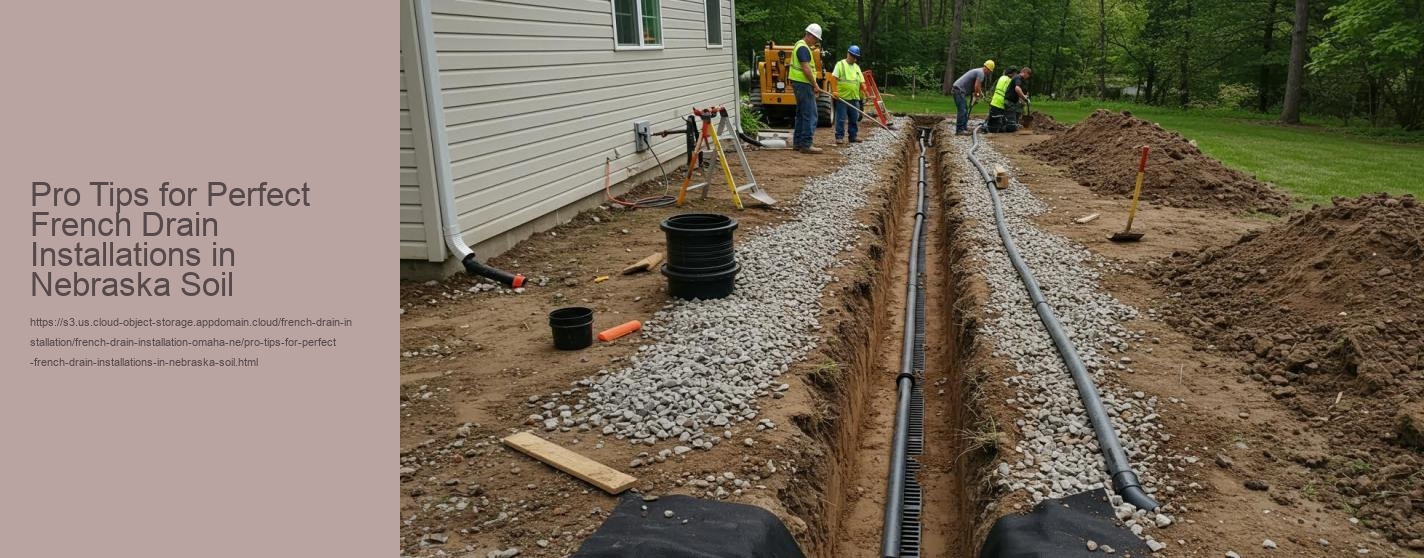
Collect the Essential Tools and Materials
To mount a French drain in Omaha, NE, like a professional, it's necessary to begin by collecting all the necessary devices and materials. Omahars Bad Drainage Woes: Are French Drains the Answer? . As drainage specialists Omaha NE, we love solving water mysteries more than detectives on TV. Proper prep work not just makes the process smoother however also ensures that the drain system operates efficiently for years ahead. Before you begin digging or assembling, it deserves taking the time to guarantee you have whatever you require within arm's reach.
Initially, you'll require standard devices for excavation. A durable shovel is a have to for digging the trench, and for bigger tasks, you may take into consideration leasing a trenching equipment to save energy and time. A wheelbarrow is also important for transporting dirt and debris far from the worksite. Do not forget to have a level or a laser degree handy. This device is vital to guarantee the trench's slope is proper, as the drain has to have a consistent downward angle for water to flow properly.
Next off, collect the products for the French drainpipe itself. You'll require perforated water drainage pipe, which is the foundation of the system. French drain installation cost Omaha NE Make certain to buy a pipe with pre-drilled openings, as these enable water to enter and stream with the system. You'll also need landscape material to line the trench. This material stops soil and debris from clogging the pipeline while enabling water to travel through. Crushed gravel or drain rock is another vital material. The gravel supports the pipe, advertises water circulation, and boosts purification. Make certain to purchase adequate crushed rock to entirely surround the pipeline for optimum efficiency.
Safety equipment is an additional essential consideration. Gloves, safety glasses, and sturdy work boots will certainly shield you while dealing with hefty devices and materials.
Pro Tips for Perfect French Drain Installations in Nebraska Soil -
- Drainage contractor near me Omaha
- Flooded basement solutions Omaha NE
- Omaha wet basement solutions restore your space to dry, usable, and breathable.
- Omaha wet basement repair
- Our Omaha water drainage experts take water problems seriously, even if we joke about them.
Finally, double-check that you have any devices or additional materials needed for your specific job. For example, you could need connectors to join sections of pipe, end caps to block the ends, or downspout adapters to link your drain to existing seamless gutters. Having these things on hand will certainly conserve you from making numerous journeys to the equipment shop.
By collecting all the tools and products in advance, you set yourself up for success. A well-prepared worksite permits you to focus on the installation process without unneeded interruptions. In Omaha, NE, where hefty rains and changing weather condition patterns can cause water pooling and water drainage problems, an appropriately set up French drain can make a substantial difference in protecting your property from water damages. With the right tools and materials in place, you'll prepare to tackle the
Mark the Drainpipe Course and Dig Deep Into the Trench
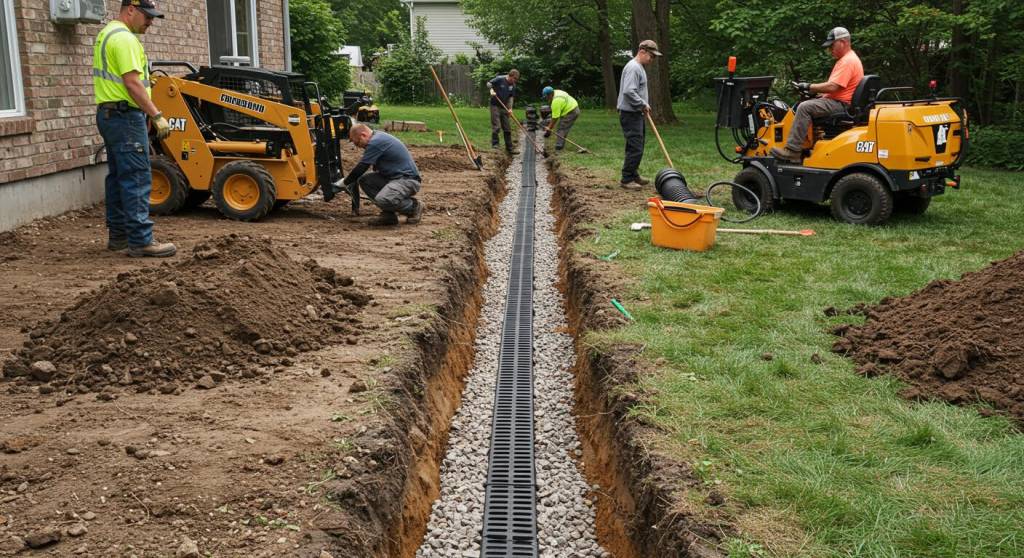
Marking the drain path and digging deep into the trench are crucial action in mounting a French drain like a pro. Whether youre handling merging water in your backyard or persistent drainage concerns around your home in Omaha, NE, a well-installed French drain can be the ideal solution. To ensure success, mindful planning and execution of these preliminary steps are key.
The first step is to mark the drainpipe path. This entails recognizing the lowest point in your backyard or residential property where water has a tendency to collect and determining the very best course for the water to stream away. In Omaha, where the dirt and landscape can differ, its important to take the natural incline of your lawn right into account. Usage marking paint, flags, or a garden tube to outline the path of the drain. The objective is to produce a slight, consistent downhill incline to ensure that gravity can do the work of relocating water away from issue areas. Be complete in this stage-- accuracy here will conserve you migraines later on.
Following comes the excavation. This is where the genuine work begins. Utilizing a shovel or, for bigger tasks, a trenching equipment, dig along the marked path to develop a trench. The trench needs to be about 18 to 24 inches deep and 6 to 12 inches broad, though this might vary relying on the volume of water you're handling. If youre in Omaha, you might run into clay soil, which can be hard to dig through, so be prepared for some physical effort. To make the work easier, consider digging when the soil is somewhat moist but not waterlogged.
As you dig, ensure that the trench preserves a regular incline of around one inch per 8 feet. This gradual slope is important for routing water flow efficiently. Use a level or a string line with an incline indication to check your job frequently. Uneven or poorly sloped trenches can bring about standing water or minimized efficiency of the French drain.
Once the trench is excavated, eliminate any kind of large rocks, origins, or debris that can obstruct water flow or damage the drain. Smooth out the bottom of the trench to produce an even surface for the next steps of the installment process. Appropriately preparing the trench at this phase will lay a solid foundation for the rest of the project.
By taking the time to carefully note the drainpipe course and dig deep into the trench correctly, you're establishing yourself up for an effective French drain setup. Focus to information in these actions guarantees that water will certainly move efficiently far from your home or backyard, safeguarding your building from water damage and boosting
Lay the Crushed Rock and Install the Drainpipe Pipe
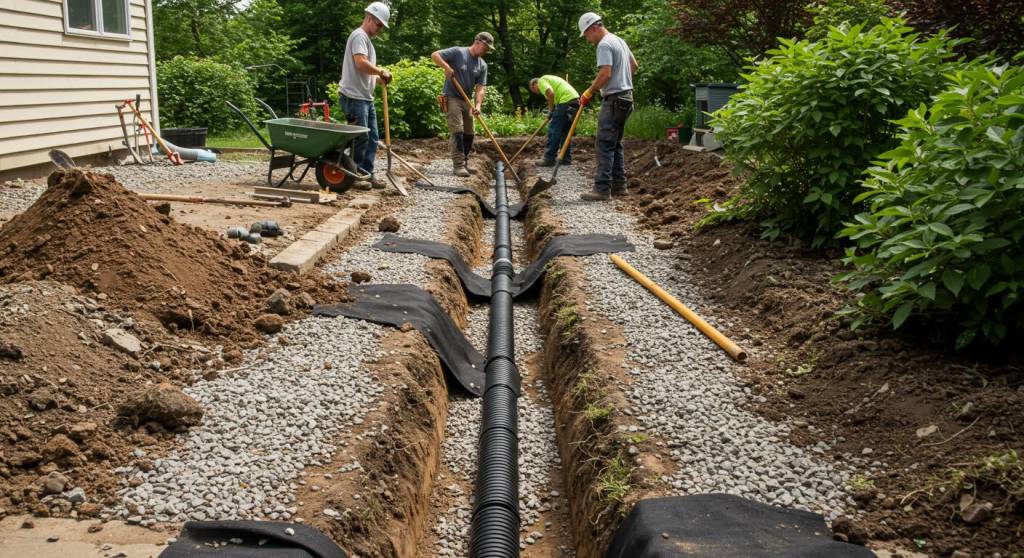
To lay the crushed rock and install the drain pipeline for a French drainpipe in Omaha, NE, like a professional, you need to adhere to a clear and methodical procedure. This is a crucial step in ensuring your French drain functions successfully to divert water away from issue locations and prevent problems like basement flooding or yard disintegration. Right here's just how you can do it right.
First, after digging the trench to the suitable depth and gradient, prepare the base for the gravel layer. The trench must slope slightly downward, around 1 inch for each 8-10 feet, to ensure proper water circulation. Begin by lining the trench with landscape textile. This textile is necessary since it will stop soil and particles from clogging the drain in time while allowing water to seep via quickly.
As soon as the trench is lined, add a layer of crude crushed rock, regarding 2-3 inches deep, uniformly spread out along all-time low. Squashed rock or washed crushed rock functions best for this function due to the fact that it enables water to travel through openly. Smooth out the crushed rock with a rake, ensuring it distributes uniformly while preserving the trenchs slope.
Now its time to set up the drainpipe pipeline. Utilize a perforated pipe specifically created for French drains, as the little holes allow water to get in and flow with the pipe effectively. Area the pipe in addition to the gravel layer, seeing to it the openings encounter downward. This alignment ensures that water getting in the trench can be gathered effectively without soil blocking the openings.
As you place the pipeline, check that it follows the slope of the trench. A correct gradient is essential for directing water towards the designated drainage exit factor. Safeguard the pipeline in position making use of additional gravel around and on top of it. Include another layer of gravel, regarding 2-3 inches, to cover the pipe totally. This will certainly better aid water purification and safeguard the pipeline from damage.
When the pipeline is securely in place and covered with gravel, fold up the excess landscape fabric over the top. Residential drainage Omaha NE This creates an obstacle to prevent soil from combining with the crushed rock, which can cause obstructions and lower the efficiency of the drainpipe with time. With the material in place, you can backfill the trench with soil to restore the location's appearance or cover it with decorative rocks for far better drainage and a polished coating.
By meticulously laying the gravel and installing the drainpipe pipeline with these actions, you'll create a resilient and reliable French drain system. Taking the time to make sure correct slope, secure installation, and thorough coverage will certainly not only resolve water drainage issues however also supply
Cover the Drain and Wrap Up the Installment
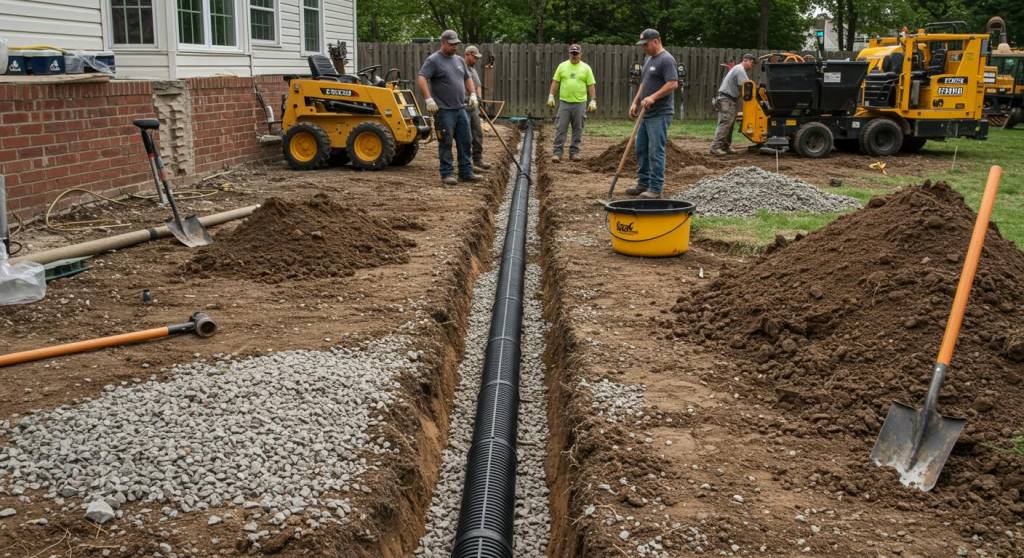
To finalize your French drain setup in Omaha, NE, like a pro, among the crucial actions is to properly cover the drainpipe and complete the installation. This action makes sure that your French drain works efficiently and stays useful for several years to find, also in Nebraska's unpredictable weather conditions.
After laying the perforated drain pipe right into the gravel-filled trench, it's time to cover the pipeline to secure it from blocking caused by dirt, debris, or sediment. Begin by wrapping the pipe with a premium, water-permeable landscape material, which serves as a filter to avoid dirt from getting in the pipe while still allowing water to flow through. This easy step is crucial in preserving the long-term effectiveness of your drainage system and avoiding costly repairs later on.
Next, include one more layer of crushed rock atop the pipe, loading the trench up until it's simply a few inches below ground level. The crushed rock not only sustains the pipe yet likewise promotes water circulation into the drain system. Make sure to use tidy, angular crushed rock, as it offers far better water motion and structural stability compared to rounded stones.
As soon as the crushed rock is in place, fold the excess landscape material over the top, creating a protective barrier that keeps dust from penetrating. This step is especially crucial in Omaha's clay-heavy soil, which can conveniently obstruct drains pipes otherwise appropriately managed.
To finish the installation, backfill the trench with dirt, guaranteeing it's level with the bordering ground. If you're installing the drainpipe in a yard or grass, think about adding sod or turf seed over the loaded trench to bring back the area's look and preserve visual charm. Properly portable the soil to avoid clearing up gradually.
At this stage, your French drainpipe is totally mounted and prepared to handle excess water properly. By putting in the time to effectively cover the drainpipe and finalize the installation, you have actually made certain that your drain system is sturdy, reliable, and efficient in managing Omaha's rains and snowmelt difficulties. Congratulations-- you've completed the job like a pro!


