Checking is an important procedure in mapping, building and construction, and land advancement that has undergone an incredible development for many years. What is the Development Technique for Precision Surveying in Montreal? Discover Plan a Survey with 3D Laser Scanning! . Standard surveying methods in Montreal, as in many various other components of the globe, depended greatly on manual strategies and tools such as theodolites, chains, and degrees. These devices called for a substantial amount of time and workforce to gauge distances, angles, and elevations. Surveyors needed to literally go across the terrain, usually under tough problems, to collect the needed information for producing maps or planning for building and construction tasks. The precision of these methods was mostly dependent on the ability and experience of the land surveyors, and while quite precise, there was constantly some space for human error.
Modern methods, on the various other hand, utilize technical improvements to attain higher precision, effectiveness, and ease of information collection. One such advanced tool is 3D laser scanning, a non-intrusive method that records comprehensive 3D pictures of objects and landscapes. This innovation is changing the method surveys are carried out in Montreal.
3D laser scanning, likewise called LiDAR (Light Discovery and Ranging), entails sending laser light beams in the direction of a target and measuring the time it takes for the light to mirror back to the scanner. This information is after that made use of to compute specific ranges, resulting in a collection of factors known as a "" factor cloud"" that stands for the checked location in 3 measurements. The point cloud information can be refined to develop very precise 3D models, which are very useful for a multitude of applications consisting of urban preparation, heritage conservation, facilities growth, and building.
The development technique for accuracy evaluating using 3D laser scanning begins with intending the study. This involves defining the scope and objectives of the study, establishing control factors, and establishing the optimum settings for the laser scanner to cover the entire location of interest. The preparation phase is essential for guaranteeing that the study is executed effectively, with marginal interruptions and redundancies.
As soon as the strategy is in location, property surveyors make use of 3D laser scanners to record the data. These devices are generally placed on tripods and can be run from another location, significantly decreasing the demand for property surveyors to gain access to challenging or hazardous surface. The rate of data acquisition is another major advantage; a site that would certainly take days to check with typical techniques can currently be scanned in simply a few hours.
After the information is gathered, it is refined using specialized software to produce detailed 3D designs. These versions can be evaluated, shared digitally, and utilized for
The introduction of 3D laser scanning technology has actually changed the area of accuracy surveying, and nowhere is this more obvious than in the bustling metropolitan area of Montreal. This vivid Canadian city, with its blend of historic architecture and contemporary facilities, offers unique challenges and chances for property surveyors. The advancement technique for accuracy surveying has actually evolved substantially with the combination of 3D laser scanning, transforming the method professionals in Montreal plan and implement their surveys.
3D laser scanning, additionally known as LiDAR (Light Discovery and Ranging), is an advanced innovation that catches in-depth three-dimensional information about physical objects and the environment. It functions by producing a laser beam in the direction of a target and gauging the moment it considers the light to show back to the scanner. This process occurs at unbelievably rapid prices, making it possible for the capture of countless information factors in an issue of minutes. These information points, known as point clouds, create an exact digital depiction of the scanned location.
In Montreal, where the conservation of heritage sites is as crucial as the building of new growths, 3D laser scanning offers a non-intrusive and extremely accurate approach of recording existing conditions. Surveyors can catch the smallest information of a website without physical get in touch with, making it excellent for delicate or unattainable areas. For new buildings, this modern technology aids in the production of as-built versions, guaranteeing that the last construct adheres exactly to the layout requirements.
The process of preparing a survey with 3D laser scanning in Montreal starts with a clear understanding of the task demands. Surveyors should take into consideration the extent of the task, the degree of information called for, and the end-use of the data. As soon as the objectives are set, they can pick the appropriate scanning equipment and approaches to achieve the preferred end results.
Throughout the survey, several scans from different positions are commonly necessary to obtain a total photo of the site. These private scans are then lined up and merged right into a detailed 3D model. Advanced software tools allow land surveyors to procedure and assess the point cloud data, removing beneficial info such as measurements, volumes, and structural deformations.
The benefits of using 3D laser scanning for accuracy checking in Montreal are countless. It substantially minimizes the time and labor needed for typical checking approaches, and the high level of precision minimizes the threat of pricey mistakes. Additionally, the electronic nature of the information makes it easily shareable among job stakeholders, promoting much better interaction and cooperation.
Finally, the growth technique for precision checking in Montreal has actually been
Accurate surveying has always been the keystone of effective building and construction, restoration, and documentation projects. In Montreal, a city where historical appeal blends with modern design, the requirement for precision takes on an also greater relevance. The growth strategy for accuracy surveying has seen a cutting edge shift with the development of 3D laser scanning technology. This innovation has redefined the conventional approaches by supplying much faster, a lot more accurate, and extremely in-depth depictions of physical spaces. Below's a detailed procedure of preparing a study utilizing 3D laser scanning in the context of Montreal's evaluating landscape.
Action 1: Specify the Job Range
Before embarking on the survey, it's important to define the task scope. In Montreal, this may include intricate building details on a heritage structure, an expansive industrial site, or a complex infrastructure network. Comprehending the end goal, whether it's for restoration, building, or historic conservation, sets the phase for all the subsequent actions.
Step 2: Select the Right Devices
The following step is picking the ideal 3D laser scanning equipment. Not all scanners are developed equivalent; some excel in interior atmospheres, while others are better suited to vast outdoor rooms. Montreal's varied landscape demands a functional scanner that can record fine details with high precision. Factors such as array, resolution, and speed of the scanner need to line up with task needs.
Step 3: Study the Location
Montreal's diverse climate can position difficulties, so it is very important to prepare the survey for excellent conditions. When on site, the study team develops reference factors and checks for any kind of challenges that might prevent the scanning procedure. The team also determines the number of scans needed and the most effective locations to position the scanner to make sure complete protection.
Tip 4: Conduct the Scanning
With every little thing in place, the real scanning starts. The 3D laser scanner functions by emitting laser beams and capturing the shown light, which is after that utilized to produce a factor cloud. This point cloud will certainly act as an electronic representation of the checked area, supplying a degree of detail that typical approaches can not match.
Step 5: Information Processing
After the scan is total, the raw data undergoes handling. This entails tidying up the factor cloud, straightening numerous scans for a cohesive model, and potentially transforming the data into formats suitable with CAD or BIM software program. This step is where the information begins to take on a useful kind, making it possible for architects, designers, and coordinators to interact with the figure
The evolution of accuracy surveying has actually been noted by substantial technical developments, and among the most cutting-edge developments in this area is the development of 3D laser scanning, particularly in the complex and vibrant urban atmospheres such as Montreal. This advanced strategy has revolutionized the means land surveyors gather information and has actually promoted the production of very precise and detailed models of city landscapes.
3D laser scanning, likewise known as LiDAR (Light Detection and Ranging), is a non-intrusive technique that records the physical residential or commercial properties of items and the environment with the use of laser light. This technology sends out numerous laser pulses per second towards the target location, and the time it takes for each pulse to return is gauged to calculate accurate distances. The result is a dense collection of information factors, referred to as a factor cloud, which can be made use of to produce comprehensive three-dimensional representations of the checked area.
Among the primary benefits of 3D laser scanning for accuracy evaluating in metropolitan settings is its unrivaled precision. The high integrity of information caught permits the creation of digital doubles of buildings, frameworks, and landscapes with millimeter-level precision. This is vital in a city like Montreal where historic structures, contemporary architecture, and complex framework exist side-by-side, and where precise measurements are necessary for both conservation and growth purposes.
An additional advantage is the speed of data collection. Typical evaluating approaches can be lengthy, especially in thick urban locations with countless features to determine. 3D laser scanning dramatically lowers the moment needed to survey a site, as it can catch comprehensive information in an issue of minutes or hours, depending upon the size and complexity of the location. This efficiency not only reduces labor costs but also lessens disruptions in active city settings.
Furthermore, 3D laser scanning boosts security for both the land surveyors and the general public. By making it possible for remote information collection, property surveyors can avoid unsafe locations or scenarios, such as high traffic areas or unstable frameworks. The security of the general public is additionally guaranteed as the innovation permits minimal interference with everyday activities, reducing the danger of mishaps associated with conventional surveying equipment set up on-site.
Information caught through 3D laser scanning can likewise be quickly shared and incorporated into different software systems for additional analysis, which is vital for collaborative urban growth tasks. Engineers, designers, and building and construction specialists can work with the exact same exact models, making sure consistency and reducing mistakes throughout the project lifecycle.
In Montreal, a city with an abundant background and a lively city material, preparing
In the busy city of Montreal, the advancement of precision surveying has taken a significant jump forward with the integration of 3D laser scanning innovation. This innovative method to surveying is transforming the way professionals capture and assess information, delivering unequaled precision and performance in a range of building and construction and remodelling jobs. In this essay, we will discover the growth strategy for accuracy evaluating in Montreal and just how 3D laser scanning is utilized to plan studies with remarkable accuracy.
The core of accuracy checking in Montreal hinges on the use of 3D laser scanning, likewise called LiDAR (Light Discovery and Ranging). This innovative technology employs a laser to measure and catch the physical attributes of an area or structure in 3 dimensions. The scanner sends out numerous laser beam of lights per 2nd, which bounce off surfaces and go back to the sensing unit, providing exact dimensions of range.
When planning a study with 3D laser scanning, the initial step is to develop the survey objectives. This might entail comprehending the structural stability of a heritage building, drawing up energy networks, or preparing for an intricate building job. Surveyors need to identify what degree of detail is called for and the best viewpoint for putting the scanner to cover the whole area of interest.
As soon as the goals are set, surveyors carry out a site see to acquaint themselves with the area and recognize any potential barriers that could hinder the laser scanning process. These can include moving automobiles, pedestrians, or environmental factors such as lighting and weather. This reconnaissance is essential for guaranteeing that the scanning procedure goes efficiently which the information collected is of the finest quality.
The real survey process involves setting up the laser scanner on a tripod and methodically catching information from different places. Overlapping scans ensure complete coverage and are later stitched with each other making use of specialized software program to develop a thorough electronic representation of the surveyed area. This electronic design, referred to as a point cloud, includes millions of private information points that can be manipulated and assessed to draw out valuable understandings.
The beauty of 3D laser scanning hinges on its versatility and precision. It can record minute information of complex geometries and large atmospheres, making it important for engineers, designers, and building experts. For example, in an effective case study, accuracy surveying was utilized to document the elaborate façades of historic buildings in Old Montreal. The resulting 3D versions provided architects with the comprehensive info needed to intend repair job while preserving the one-of-a-kind building heritage.
An additional effective application of accuracy surveying in Montreal involved the expansion of
The growth of accuracy checking techniques has actually been revolutionized by the development of 3D laser scanning modern technology, which has supplied land surveyors with the capability to record thorough and precise depictions of atmospheres and structures. In Montreal, as in various other components of the world, this modern technology has actually come to be an invaluable device for experts in construction, style, and metropolitan preparation. Nevertheless, despite its countless benefits, 3D laser scanning is gone along with by a set of obstacles and constraints that must be recognized and dealt with.
Among the key obstacles encountered by surveyors using 3D laser scanning in Montreal is the high preliminary expense of tools. The financial investment needed for a high-grade 3D laser scanner can be significant, which can be an obstacle for small companies or individual property surveyors. Along with the in advance price, the upkeep and prospective updates to software application and equipment can even more add to the financial worry.
Another constraint is the dependence on line-of-sight. Laser scanners can only catch surface areas that are straight visible to them. In complicated urban settings such as Montreal, with its mix of historical and contemporary architecture, this can result in information spaces where the laser can not get to as a result of blockages. Land surveyors should for that reason plan their scans meticulously and may require to perform numerous scans from various places to make sure full coverage.
Weather conditions can likewise affect the effectiveness of 3D laser scanning. Damaging weather condition, such as hefty rainfall or snow, which Montreal can experience, can disrupt the accuracy of the laser scans. Cold temperature levels can influence equipment performance and battery life, while intense sunlight can saturate sensors, minimizing the high quality of the information captured.
Data handling is one more area where difficulties occur. The raw information accumulated from 3D laser scans is often large and needs substantial computational power and time to process into usable versions. This handling can end up being a traffic jam, especially for large tasks, demanding robust hardware and experienced drivers that can take care of and control the data effectively.
In addition, while 3D laser scanning gives high accuracy, it is not immune to errors. Calibration, tool stability, and user experience all play important functions in the precision of the final result. Unreliable data can lead to costly blunders in the preparation and construction stages of a job, stressing the need for strenuous quality assurance actions.
Last but not least, there is a learning contour associated with 3D laser scanning technology. Evaluating specialists have to remain abreast of the most recent innovations and be skilled at utilizing facility software program for information analysis. This requires continuous training and expert advancement,
Future Improvements in Precision Evaluating Technologies and Techniques
In the busy metropolis of Montreal, the advancement of accuracy evaluating methods is a vital aspect of city advancement, facilities upkeep, and building and construction tasks. The advancement method for accuracy checking in Montreal is progressively embracing sophisticated modern technologies, with 3D laser scanning at the leading edge of this transformative period. Let's explore exactly how this innovation is changing the checking landscape and what future developments may even more improve precision in evaluating techniques.
Finding the Potential of 3D Laser Scanning
3D laser scanning, likewise referred to as LiDAR (Light Detection and Ranging), has reinvented the area of precision surveying by supplying rapid, accurate, and detailed measurements of physical areas. This non-intrusive approach involves giving off laser beams in the direction of the target area and catching the reflected light to develop factor clouds. These factor clouds develop high-resolution electronic 3D models of the checked area.
In Montreal, the application of 3D laser scanning is crucial in the preservation of historical style, the building and construction of brand-new advancements, and the growth of transport networks. Surveyors can now catch the intricacies of elaborate facades, display building development in real-time, and ensure that projects comply with strict tolerances, all with very little interruption to the surrounding environment.
Planning a Survey with 3D Laser Scanning
Preparation a study with 3D laser scanning modern technology starts with establishing clear objectives. In Montreal, where both modern high-rise buildings and historic piles exist together, it's critical to tailor the study technique according to the task's requirements. Surveyors need to consider elements such as the degree of detail needed, the size of the location to be checked, and the possible obstacles that may hinder the scanning process.
As soon as the goals are established, the next action is to position the laser scanning devices tactically around the website to guarantee thorough protection. As the data is collected, it's processed with innovative software that stitches together the factor clouds, developing a cohesive 3D design. This electronic depiction then acts as a fundamental tool for designers, engineers, and stakeholders to analyze and make informed choices.
Envisioning Future Advancements
The future of precision surveying in Montreal looks bright, with the potential for substantial improvements on the horizon. One such advancement is the assimilation of artificial intelligence (AI) with 3D laser scanning. AI formulas can enhance information handling, automate function acknowledgment, and discover adjustments in time, resulting in also
Main article: Architecture of Montreal
|
|
|
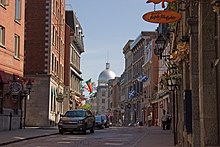
Many colonial era buildings can be found in Old Montreal with several dating as far back as the late 17th century.
For over a century and a half, Montreal was the industrial and financial centre of Canada.[102] This legacy has left a variety of buildings including factories, elevators, warehouses, mills, and refineries, that today provide an invaluable insight into the city's history, especially in the downtown area and the Old Port area. There are 50 National Historic Sites of Canada, more than any other city.[103]
Some of the city's earliest still-standing buildings date back to the late 17th and early 18th centuries. Although most are clustered around the Old Montreal area, such as the Sulpician Seminary adjacent to Notre Dame Basilica that dates back to 1687, and Château Ramezay, which was built in 1705, examples of early colonial architecture are dotted throughout the city. Situated in Lachine, the Le Ber-Le Moyne House is the oldest complete building in the city, built between 1669 and 1671. In Point St. Charles visitors can see the Maison Saint-Gabriel, which can trace its history back to 1698.[104] There are many historic buildings in Old Montreal in their original form: Notre Dame of Montreal Basilica, Bonsecours Market, and the 19th‑century headquarters of all major Canadian banks on St. James Street (French: Rue Saint Jacques). Montreal's earliest buildings are characterized by their uniquely French influence and grey stone construction.[105]
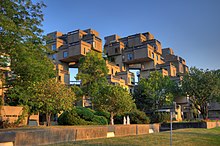
Habitat 67 is a model community and housing complex developed for Expo 67 World Fair.
iScano Montreal seamlessly integrates 3D laser scanning data into BIM processes, enhancing collaboration, reducing errors, and streamlining construction workflows.
iScano contributes to sustainable construction by optimizing project efficiency, reducing material waste, and promoting precise resource management in Montreal.
iScano's services facilitate accurate project planning, reducing risks and improving overall execution for local construction companies in Montreal.
Yes, iScano Montreal provides training programs and consultations to empower local professionals with the knowledge and skills needed to leverage 3D laser scanning in construction projects.