Navigating Endpoint Detection and Response: A Beginners Guide
signature
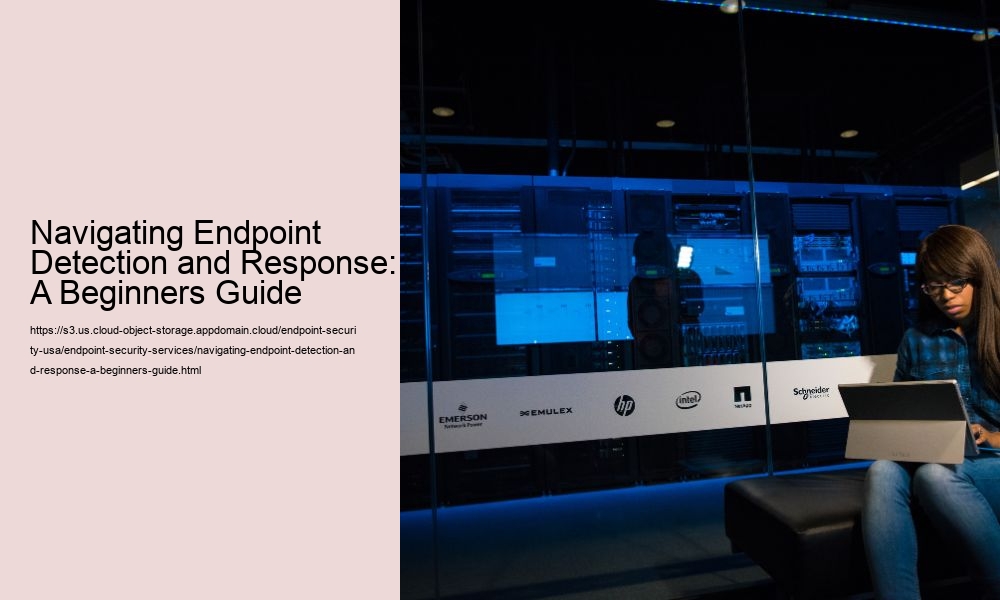
Navigating the world of Endpoint Detection and Response (EDR) can seem daunting for beginners. signature With the ever-evolving landscape of cybersecurity threats, understanding how to effectively utilize EDR tools is critical. compliance This guide aims to simplify the basics of EDR and provide practical steps to implement it in your cybersecurity strategy.
Firstly, lets understand what EDR is. singleframework Endpoint Detection and Response is a technology used to protect endpoints, which could be computers, mobile devices, or servers, from cybersecurity threats. EDR tools are designed to detect suspicious activities, investigate potential threats, and respond to them promptly.
malware
virtualization
control
tcp
tablet
monitoring
threat
endpointsecurityusa
docker
exploit
hardening
incident
api
botnet
threatintel
active
Unlike traditional antivirus software that relies on known threat signatures, EDR systems focus on detecting behavior anomalies and can provide insights into the origin and scope of the threat.
The very first step in navigating EDR is choosing the right tool.
trojan
ip
hardware
aws
recovery
solution
biometrics
regulation
security
container
iot
There are many EDR solutions out there, each with its own set of features.
single
botnet
threatintel
active
compliance
laptop
intelligence
worm
kubernetes
behavioral
network
session
azure
iso
remediation
identity
When selecting an EDR tool, consider factors such as the size of your network, the sensitivity of the data you handle, and of course, your budget. Its also vital to pick a solution that integrates well with your existing security infrastructure.
Once you have your EDR tool in place, proper configuration is key.
signature
linux
mssp
alert
audit
gdpr
server
isolation
orchestration
detection
ai
Many users make the mistake of running with default settings, which might not be optimized for their specific needs. malware Take the time to customize the settings. This might involve setting up which types of behaviors are flagged as suspicious, defining escalation protocols, and determining how data is logged.
Training is another crucial element. EDR systems are sophisticated and can generate a lot of data and alerts. Your IT team needs to understand how to interpret this information accurately. Without proper training, the risk of overlooking a genuine threat or wasting time on false positives is high. Investing in training sessions with experts can really pay off!
Another important aspect to consider is the ongoing management of your EDR tool. Cyber threats are constantly changing, and so should your EDR configurations. Regular updates and patches are necessary to ensure that your tool is equipped to deal with the latest threats. Additionally, regular review sessions to analyze the effectiveness of your EDR system can help you make necessary adjustments and improve its efficiency.
Lastly, don't forget the importance of incident response planning! Having an EDR system is great, but knowing what to do when it detects a threat is crucial. Your incident response plan should outline clear steps and responsibilities for containing and mitigating any damage. This plan should be practiced regularly through drills and updated based on both real incident learnings and new hypothetical threat scenarios.
In conclusion, while navigating Endpoint Detection and Response systems might initially seem overwhelming, breaking down the process into manageable steps can greatly simplify it. scalability Remember, the goal of EDR is not just to alert you about potential threats but to provide a comprehensive framework for dealing with them effectively. With the right tool, proper setup, and ongoing management, EDR can significantly enhance your organizations cybersecurity posture. trojan And remember, always stay proactive, not just reactive!
There are numerous measures available to prevent cyberattacks. Cybersecurity measures include firewalls, anti-virus software, intrusion detection and prevention systems, encryption, and login passwords.[2] There have been attempts to improve cybersecurity through regulation and collaborative efforts between the government and the private sector to encourage voluntary improvements to cybersecurity.[1][2][3] Industry regulators, including banking regulators, have taken notice of the risk from cybersecurity and have either begun or planned to begin to include cybersecurity as an aspect of regulatory examinations.[2]
Recent research suggests there is also a lack of cyber-security regulation and enforcement in maritime businesses, including the digital connectivity between ships and ports.[4]
In 2011 the United States Department of Defense (DoD) released a guidance called the Department of Defense Strategy for Operating in Cyberspace which articulated five goals: to treat cyberspace as an operational domain, to employ new defensive concepts to protect DoD networks and systems, to partner with other agencies and the private sector in pursuit of a "whole-of-government cybersecurity Strategy", to work with international allies in support of collective cybersecurity and to support the development of a cyber workforce capable of rapid technological innovation.[3] A March 2011 Government Accountability Office (GAO) report "identified protecting the federal government's information systems and the nation's cyber critical infrastructure as a governmentwide high-risk area" noting that federal information security had been designated a high-risk area since 1997.[5] As of 2003 systems protecting critical infrastructure, called cyber critical infrastructure protection of cyber CIP has also been included.[6]
In November 2013, the DoD put forward the new cybersecurity rule (78 Fed. Reg. 69373), which imposed certain requirements on contractors: compliance with certain National Institute of Standards and Technology (NIST) IT standards, mandatory reporting of cybersecurity incidents to the DoD, and a "flow-down" clause that applies the same requirements to subcontractors.[7]
A June 2013 Congressional report found there were over 50 statutes relevant to cybersecurity compliance. The Federal Information Security Management Act of 2002 (FISMA) is one of the key statutes governing federal cybersecurity regulations.[7]
There are few federal cybersecurity regulations and the ones that exist focus on specific industries. The three main cybersecurity regulations are the 1996 Health Insurance Portability and Accountability Act (HIPAA), the 1999 Gramm-Leach-Bliley Act, and the 2002 Homeland Security Act, which included the Federal Information Security Management Act (FISMA). The three regulations mandate that healthcare organizations, financial institutions, and federal agencies should protect their systems and information.[3] For example, FISMA, which applies to every government agency, "requires the development and implementation of mandatory policies, principles, standards, and guidelines on information security." However, the regulations do not address numerous computer-related industries, such as Internet service providers (ISPs) and software companies.[4] Furthermore, the regulations do not specify what cybersecurity measures must be implemented and require only a "reasonable" level of security. The vague language of these regulations leaves much room for interpretation. Bruce Schneier, the founder of Cupertino's Counterpane Internet Security, argues that companies will not make sufficient investments in cybersecurity unless the government forces them to do so.[5] He also states that successful cyberattacks on government systems still occur despite government efforts.[6]
State governments have attempted to improve cybersecurity by increasing public visibility of firms with weak security. In 2003, California passed the Notice of Security Breach Act, which requires that any company that maintains personal information of California citizens and has a security breach must disclose the details of the event. Personal information includes name, social security number, driver's license number, credit card number or financial information.[7] Several other states have followed California's example and passed similar security breach notification regulations.[8] Such security breach notification regulations punish firms for their cybersecurity failures while giving them the freedom to choose how to secure their systems. Also, the regulation creates an incentive for companies to voluntarily invest in cybersecurity to avoid the potential loss of reputation and the resulting economic loss that can come from a successful cyber attack.[9]
In 2004, the California State Legislature passed California Assembly Bill 1950, which also applies to businesses that own or maintain personal information for California residents. The regulation dictates for businesses to maintain a reasonable level of security and that they required security practices also extend to business partners.[9] The regulation is an improvement on the federal standard because it expands the number of firms required to maintain an acceptable standard of cybersecurity. However, like the federal legislation, it requires a "reasonable" level of cybersecurity, which leaves much room for interpretation until case law is established.[10]
The US Congress has proposed numerous bills that expand upon cybersecurity regulation. The Consumer Data Security and Notification Act amends the Gramm-Leach-Bliley Act to require disclosure of security breaches by financial institutions. Congressmen have also proposed "expanding Gramm-Leach-Bliley to all industries that touch consumer financial information, including any firm that accepts payment by a credit card."[11] Congress has proposed cybersecurity regulations similar to California's Notice of Security Breach Act for companies that maintain personal information. The Information Protection and Security Act requires that data brokers "ensure data accuracy and confidentiality, authenticate and track users, detect and prevent unauthorized activity, and mitigate potential harm to individuals."[12]
In addition to requiring companies to improve cybersecurity, Congress is also considering bills that criminalize cyberattacks. The Securely Protect Yourself Against Cyber Trespass Act (SPY ACT) was a bill of this type. It focused on phishing and spyware bill and was passed on May 23, 2005, in the US House of Representatives but died in the US Senate.[9] The bill "makes unlawful the unauthorized usage of a computer to take control of it, modify its setting, collect or induce the owner to disclose personally identifiable information, install unsolicited software, and tamper with security, anti-spyware, or anti-virus software."[13]
On May 12, 2011, US president Barack Obama proposed a package of cybersecurity legislative reforms to improve the security of US persons, the federal government, and critical infrastructure. A year of public debate and Congress hearings followed, resulting in the House of Representative passing an information sharing bill and the Senate developing a compromise bill seeking to balance national security, privacy, and business interests.
In July 2012, the Cybersecurity Act of 2012 was proposed by Senators Joseph Lieberman and Susan Collins.[14] The bill would have required creating voluntary "best practice standards" for protection of key infrastructure from cyber attacks, which businesses would be encouraged to adopt through incentives such as liability protection.[15] The bill was put to a vote in the Senate but failed to pass.[16] Obama had voiced his support for the Act in a Wall Street Journal op-ed[17], and it also received support from officials in the military and national security including John O. Brennan, the chief counterterrorism adviser to the White House.[18][19] According to The Washington Post, experts said that the failure to pass the act may leave the United States "vulnerable to widespread hacking or a serious cyberattack." [20] The act was opposed by Republican senators like John McCain who was concerned that the act would introduce regulations that would not be effective and could be a "burden" for businesses.[21] After the Senate vote, Republican Senator Kay Bailey Hutchison stated that the opposition to the bill was not a partisan issue but it not take the right approach to cybersecurity.[22]The senate vote was not strictly along partisan lines, as six Democrats voted against it, and five Republicans voted for it.[23] Critics of the bill included the US Chamber of Commerce,[24] advocacy groups like the American Civil Liberties Union and the Electronic Frontier Foundation,[25] cybersecurity expert Jody Westby, and The Heritage Foundation, both of whom argued that although the government must act on cybersecurity, the bill was flawed in its approach and represented "too intrusive a federal role."[26]
In February 2013, Obama proposed the Executive Order Improving Critical Infrastructure Cybersecurity. It represents the latest iteration of policy but is not considered to be law as it has not been addressed by Congress yet. It seeks to improve existing public-private partnerships by enhancing timeliness of information flow between DHS and critical infrastructure companies. It directs federal agencies to share cyber threat intelligence warnings to any private sector entity identified as a target. It also tasks DHS with improving the process to expedite security clearance processes for applicable public and private sector entities to enable the federal government to share this information at the appropriate sensitive and classified levels. It directs the development of a framework to reduce cyber risks, incorporating current industry best practices and voluntary standards. Lastly, it tasks the federal agencies involved with incorporating privacy and civil liberties protections in line with Fair Information Practice Principles.[10]
In January 2015, Obama announced a new cybersecurity legislative proposal. The proposal was made in an effort to prepare the US from the expanding number of cyber crimes. In the proposal, Obama outlined three main efforts to work towards a more secure cyberspace for the US. The first main effort emphasized the importance of enabling cybersecurity information sharing. By enabling that, the proposal encouraged information sharing between the government and the private sector. That would allow the government to know what main cyber threats private firms are facing and would then allow the government to provide liability protection to those firms that shared their information. Furthermore, that would give the government a better idea of what the US needs to be protected against. Another main effort that was emphasized in this proposal was to modernize the law enforcement authorities to make them more equipped to properly deal with cyber crimes by giving them the tools they need in order to do so. It would also update classifications of cyber crimes and consequences. One way this would be done would be by making it a crime for overseas selling of financial information. Another goal of the effort is to place cyber crimes prosecutable. The last major effort of the legislative proposal was to require businesses to report data breaching to consumers if their personal information had been sacrificed. By requiring companies to do so, consumers are aware of when they are in danger of identity theft.[11]
In February 2016, Obama developed a Cybersecurity National Security Action Plan (CNAP). The plan was made to create long-term actions and strategies in an effort to protect the US against cyber threats. The focus of the plan was to inform the public about the growing threat of cyber crimes, improve cybersecurity protections, protects personal information of Americans, and to inform Americans on how to control digital security. One of the highlights of this plan include creating a "Commission on Enhancing National Cybersecurity." The goal of this is to create a Commission that consists of a diverse group of thinkers with perspectives that can contribute to make recommendations on how to create a stronger cybersecurity for the public and private sector. The second highlight of the plan is to change Government IT. The new Government IT will make it so that a more secure IT can be put in place. The third highlight of the plan is to give Americans knowledge on how they can secure their online accounts and avoid theft of their personal information through multi-factor authentication. The fourth highlight of the plan is to invest 35% more money that was invested in 2016 into cybersecurity.[12]
Recent federal and sectoral developments (2023-2025)
In July 2023, the SEC adopted rules that require public companies to report “material” cybersecurity incidents on Form 8-K and to describe risk management and governance practices in periodic reports; the incident disclosure is due four business days after a registrant determines materiality. Most registrants began complying in December 2023.[13][14]
At the state level, the New York Department of Financial Services amended its cybersecurity regulation (23 NYCRR Part 500) with a second set of changes that became effective on 1 November 2023. The amendments expand requirements for governance and incident handling, and introduce heightened obligations for larger “Class A” firms.[15]
The Federal Trade Commission amended the Safeguards Rule to add a breach-notification obligation for certain non-bank financial institutions. The requirement is now in effect and calls for notification to the FTC as soon as practicable and no later than 30 days after discovery when an incident involves the information of at least 500 consumers.[16][17]
In health care, the HIPAA Security Rule has been the subject of a modernization proposal. The U.S. Department of Health and Human Services released a notice of proposed rulemaking in late 2024 with publication in the Federal Register on 6 January 2025, seeking updates to strengthen requirements for safeguarding electronic protected health information. [18][19]
Following the 2021 Colonial Pipeline incident, the Transportation Security Administration issued and later revised pipeline cybersecurity Security Directives. A redacted version of SD Pipeline-2021-02E was posted in July 2024, and the agency maintains a page listing current security directives for pipelines and other modes.[20][21]
In addition to regulation, the federal government has tried to improve cybersecurity by allocating more resources to research and collaborating with the private sector to write standards. In 2003, the President's National Strategy to Secure Cyberspace made the Department of Homeland Security (DHS) responsible for security recommendations and researching national solutions. The plan calls for cooperative efforts between government and industry "to create an emergency response system to cyber-attacks and to reduce the nation's vulnerability to such threats "[27] In 2004, the US Congress allocated $4.7 billion toward cybersecurity and achieving many of the goals stated in the President's National Strategy to Secure Cyberspace.[28] Some industry security experts state that the President's National Strategy to Secure Cyberspace is a good first step but is insufficient.[29] The President's National Strategy states that the purpose is to provide a framework for the owners of computer systems to improve their security rather than the government taking over and solving the problem.[30] However, companies that participate in the collaborative efforts outlined in the strategy are not required to adopt the discovered security solutions.
In the United States, the US Congress is trying to make information more transparent after the Cyber Security Act of 2012, which would have created voluntary standards for protecting vital infrastructure, failed to pass through the Senate.[22] In February 2013, the White House issued an executive order, titled "Improving Critical Infrastructure Cybersecurity," which allows the executive branch to share information about threats with more companies and individuals.[22][23] In April 2013, the House of Representatives passed the Cyber Intelligence Sharing and Protection Act (CISPA), which calls for protecting against lawsuits aimed at companies that disclose breach information.[22] The Obama administration said that it might veto the bill.[22]
In the light of the hacking of the website of the Indian Space Agency's commercial arm in 2015, Antrix Corporation and government's Digital India programme, a cyberlaw expert and advocate at the Supreme Court of India, Pavan Duggal, stated that "a dedicated cyber security legislation as a key requirement for India. It is not sufficient to merely put cyber security as a part of the IT Act. We have to see cyber security not only from the sectoral perspective, but also from the national perspective."[24]
More on India, Their cyber-security framework is built primarily on the Information Technology Act, 2000 (IT Act) and its 2008 amendments, which give legal recognition to electronic records and digital signatures and create offenses for unauthorized access, data tampering and certain forms of online content. The Act also designates the Indian Computer Emergency Response Team (CERT-In) as the national agency for incident response under section 70B, with functions that include collecting and analyzing incident information, issuing advisories and coordinating technical response. [25][26]
Under the IT Act, a series of rules and notifications provide more detailed obligations. The Information Technology (Intermediary Guidelines and Digital Media Ethics Code) Rules, 2021 place due diligence requirements on “intermediaries” such as social media and messaging services, including provisions on content take down and for certain categories of content, traceability of the originator.[27]
In April 2022, CERT-In issued binding directions under section 70B that require service providers, intermediaries, data centers, virtual asset service providers and virtual private network (VPN) providers to report specified cyber incidents to the agency within six hours of detection and to retain certain system logs for 180 days. The directions also call for maintaining accurate subscriber or customer information that can be furnished to authorities on request.[28]
China has developed a comprehensive framework of laws and regulations that govern cyber security, data and personal information. The core instruments are the Cybersecurity Law, which entered into force in 2017, the Data Security Law, effective in 2021, and the Personal Information Protection Law (PIPL), effective in November 2021. Together they regulate network operators, “critical information infrastructure operators”, the classification and protection of data, and the processing of personal information, with an explicit emphasis on national security and public interest.[29]
The Cybersecurity Law requires operators of critical information infrastructure to adopt technical and organizational security measures, undergo security reviews for certain network products and services, and, in many cases, store personal information and “important data” generated within mainland China on domestic servers unless a security assessment is passed for cross-border transfers.[29] The Data Security Law introduces a layered system for classifying and protecting data, including the concept of “important data”, and links data handling obligations to potential risks for national security, the public interest and individual rights.[29]
The Personal Information Protection Law sets out principles for lawful, fair and transparent processing of personal information, defines the rights of individuals over their data, and establishes duties for personal information handlers that are similar to those imposed on data controllers in other jurisdictions. It has extra territorial effect in certain situations where organizations outside China handle the personal information of individuals in China for providing products or services or for analyzing their behavior, and it imposes additional requirements such as security assessments, standard contracts or certification for transferring personal information abroad.[30]
Detailed rules issued by the Cyberspace Administration of China, including the Measures for Security Assessment of Cross Border Data Transfers that took effect in 2022, further specify when data exporters must apply for an official security assessment, for example when exporting important data or large volumes of personal information. Business groups and legal commentators have highlighted the compliance burden and uncertainty created by overlapping definitions and approval procedures, especially for multinational companies that need to move operational or research data out of China.[31][32][33]
These data transfer rules have also affected international scientific cooperation. In 2025 several major European public research funders announced pauses or changes to co-funded programs with Chinese partners, citing concerns that China’s data protection regime, particularly under the Data Security Law, makes it difficult to share research data across borders while remaining compliant.[34]
Cybersecurity standards have been of great prominence in today's technology driven businesses. To maximize their profits, corporations leverage technology by running most of their operations by the internet. Since there are a large number of risks that entail internetwork operations, such operations must be protected by comprehensive and extensive regulations. Existing cybersecurity regulations all cover different aspects of business operations and often vary by region or country in which a business operates. Because of the differences in a country's society, infrastructure, and values, one overarching cyber security standard is not optimal for decreasing risks. While US standards provide a basis for operations, the European Union has created a more tailored regulation for businesses operating specifically within the EU. Also, in light of Brexit, it is important to consider how the UK has chosen to adhere to such security regulations.
Three major regulations within the EU include the ENISA, the NIS Directive and the EU GDPR. They are part of the Digital Single Market strategy.
Regarding standards, the Cybersecurity Act / ENISA Regulation does not refer directly to standards. Nevertheless, ENISA recognises on its website that "EU’s cybersecurity strategy underscores support for greater standardisation via the European standardisation organisations (CEN, CENELEC and ETSI) as well as ISO.[35]"
ISO/IEC Standards, as well as European Standards from CEN, CENELEC and ETSI can be used on a voluntary way to support the requirements in the EU legislation. An updated list of ISO/IEC and CEN/CENELEC standards on the topic of Cybersecurity can be followed up via the free and publicly available information website Genorma.com.[36]
The European Union Agency for Cybersecurity (ENISA) is a governing agency that was originally set up by the Regulation (EC) No 460/2004 of the European Parliament and of the Council of 10 March 2004 for the Purpose of Raising Network and Information Security (NIS) for all internetwork operations in the EU. ENISA currently runs under Regulation (EU) No 526/2013,[37] which has replaced the original regulation in 2013. ENISA works actively with all member states of the EU to provide a range of services. The focus of their operations are on three factors:
Recommendations to member states on the course of action for security breaches
Policy making and implementation support for all members states of the EU
Direct support with ENISA taking a hands-on approach to working with operational teams in the EU[38]
ENISA is made up of a management board that relies on the support of the executive director and the Permanent Stakeholders Group. Most operations, however, are run by the heads of various departments.[39]
ENISA has released various publications that cover all major issues on cybersecurity. ENISA's past and current initiatives include the EU Cloud Strategy, Open Standards in Information Communications Technology, a Cyber Security Strategy of the EU and a Cyber Security Coordination Group. ENISA also works in collaboration with existing international standard organizations like the ISO and the ITU.[40]
On July 6, 2016, the European Parliament set into policy the Directive on Security of Network and Information Systems (the NIS Directive).[41]
The directive went into effect in August 2016, and all member states of the European Union were given 21 months to incorporate the directive's regulations into their own national laws.[42] The aim of the NIS Directive is to create an overall higher level of cybersecurity in the EU. The directive significantly affects digital service providers (DSPs) and operators of essential services (OESs). Operators of essential services include any organizations whose operations would be greatly affected in the case of a security breach if they engage in critical societal or economic activities. Both DSPs and OES are now held accountable for reporting major security incidents to Computer Security Incident Response Teams (CSIRT).[43] While DSPs are not held to as stringent regulations as operators of essential services, DSPs that are not set up in the EU but still operate in the EU still face regulations. Even if DSPs and OES outsource the maintenance of their information systems to third parties, the NIS Directive still holds them accountable for any security incidents.[44]
The member states of the EU are required to create a NIS directive strategy, which includes the CSIRTs, in addition to National Competent Authorities (NCAs) and Single Points of Contact (SPOCs). Such resources are given the responsibility of handling cybersecurity breaches in a way that minimizes impact. In addition, all member states of the EU are encouraged to share cyber security information.[45]
Security requirements include technical measures that manage the risks of cybersecurity breaches in a preventative manner. Both DSP and OES must provide information that allows for an in depth assessment of their information systems and security policies.[46] All significant incidents must be notified to the CSIRTs. Significant cybersecurity incidents are determined by the number of users affected by the security breach as well as the longevity of the incident and the geographical reach of the incident.[46]
The NIS2 Directive (Directive (EU) 2022/2555) broadened the sectors covered by EU network and information security rules and updated incident reporting and oversight. Member States were required to transpose NIS2 by 17 October 2024, and the earlier NIS Directive was repealed on 18 October 2024. [47]
Only 23 Member States have fully implemented the measures contained with the NIS Directive. Infringement proceedings against them to enforce the Directive have not taken place, and they are not expected to take place in the near future.[48] This failed implementation has led to the fragmentation of cybersecurity capabilities across the EU, with differing standards, incident reporting requirements and enforcement requirements being implemented in different Member States.
The Cyber Resilience Act (Regulation (EU) 2024/2847) sets horizontal cybersecurity requirements for products with digital elements. It was adopted on 23 October 2024. Application is staged, with certain provisions applying in 2026 and full application from 11 December 2027, as set out in Article 71. [49]ENISA will have a key role in setting up and maintaining the European cybersecurity certification framework.[50]
The EU General Data Protection Regulation (GDPR) was set into place on 14 April 2016, but then the date of enforcement has been changed to 25 May 2018.[51] The GDPR aims to bring a single standard for data protection among all member states in the EU. Changes include the redefining of geographical borders. It applies to entities that operate in the EU or deal with the data of any resident of the EU. Regardless of where the data is processed, if an EU citizen's data is being processed, the entity is now subject to the GDPR.[52]
Fines are also much more stringent under the GDPR and can total €20 million or 4% of an entity's annual turnover, whichever is higher.[52] In addition, like in previous regulations, all data breaches that effect the rights and freedoms of individuals residing in the EU must be disclosed within 72 hours.
The overarching board, the EU Data Protection Board, EDP, is in charge of all oversight set by the GDPR.
Consent plays a major role in the GDPR. Companies that hold data in regards to EU citizens must now also offer to them the right to back out of sharing data just as easily as when they consented to sharing data.[53]
In addition, citizens can also restrict processing of the data stored on them and can choose to allow companies to store their data but not process it, which creates a clear differentiation. Unlike previous regulations, the GDPR also restricts the transfer of a citizen's data outside of the EU or to a third party without a citizen's prior consent.[53]
On the 16 January 2023, the EU Parliament and Council adopted the 2022/2555 of the European Parliament and of the Council of 14 December 2022 on measures for a high common level of cybersecurity across the Union, amending Regulation (EU) No 910/2014 and Directive (EU) 2018/1972, and repealing Directive (EU) 2016/1148 (NIS Directive)[54]. This new Directive aims to extend the scope of obligations on entities required to take measures to increase their cybersecurity capabilities. The Directive also aims to harmonise the EU approach to incident notifications, security requirements, supervisory measures and information sharing.[55] The National Cyber Security Bill 2024 will transpose NIS2 into Irish law once enacted.[56]
Against the backdrop of increasing dependence on digital technologies, the COVID-19 pandemic highlighted how sensitive digitised societies can be to unexpected risks.[57] In light of this evidence, the European Commission reviewed the existing NIS (Network and Information Security) Directive and identified the following critical points:
insufficient cyber resilience of companies operating in the EU,
inconsistent compared robustness across Member States and sectors,
insufficient shared understanding of the main threats and challenges among Member States,
lack of joint crisis response.
Following various rounds of consultations, the final NIS 2 Directive[58] was adopted by the EU Commission on 14 December 2022.
The NIS 2 Directive imposes stricter requirements on national authorities than the previous NIS Directive and aligns sanction possibilities across Member States. The directive introduces stricter supervisory measures for national authorities, stricter enforcement requirements, and harmonisation of sanction regimes in all Member States.
Unlike, for example, in the ordinance issued in 2016 under the German BSI Act [de] to protect critical infrastructures (BSI-KritisV),[59] culture and media, local public transport [de] and wholesale of medicines are not covered by the NIS 2 Directive, but new areas such as space, top-level domain registrars and trust service providers were added.[60] The increase in affected institutions is mainly due to the fact that the thresholds known from the BSI-KritisV no longer apply here. In addition, there are several gradations: a distinction is now made between so-called essential entities and important entities, primarily based on the number of employees or turnover. As before, there are also critical entities.[61]
DORA creates a regulatory framework on digital operational resilience whereby all firms need to make sure they can withstand, respond to and recover from all types of ICT-related disruptions and threats. These requirements are homogenous across all EU member states. The regulation will apply from 17 January 2025 for relevant financial entities and ICT third-party service providers.[62]
The Cyber Resilience Act (Regulation (EU) 2024/2847) sets horizontal cybersecurity requirements for products with digital elements. It was adopted on 23 October 2024. Application is staged, with certain provisions applying in 2026 and full application from 11 December 2027, as set out in Article 71.[63][64][65]
The Product Security and Telecommunications Infrastructure (PSTI) regime introduced mandatory security requirements for consumer “connectable” products in the UK. It came into force on 29 April 2024 and includes measures such as banning default or easily guessable passwords, publishing a point of contact for vulnerability reporting, and providing transparency about security updates. [68][69]
Outside binding law, the NIST Cybersecurity Framework was updated to version 2.0 in February 2024. The update added a new Govern function that emphasizes governance and supply-chain risk and is intended to inform how organizations implement the other functions. [70][71]
While experts agree that cybersecurity improvements are necessary, there is disagreement about whether the solution is more government regulation or more private-sector innovation.
Many government officials and cybersecurity experts believe that the private sector has failed to solve the cybersecurity problem and that regulation is needed. Richard Clarke states that "industry only responds when you threaten regulation. If industry does not respond [to the threat], you have to follow through."[31] He believes that software companies must be forced to produce more secure programs.[32]Bruce Schneier also supports regulation that encourages software companies to write more secure code through economic incentives.[33] US Representative Rick Boucher (D–VA) proposes improving cybersecurity by making software companies liable for security flaws in their code.[34] In addition, to improving software security, Clarke believes that certain industries, such as utilities and ISPs, require regulation.[35]
On the other hand, many private-sector executives and lobbyists believe that more regulation will restrict their ability to improve cybersecurity. Harris Miller, a lobbyist and president of the Information Technology Association of America, believes that regulation inhibits innovation.[36] Rick White, former corporate attorney and president and CEO of the lobby group TechNet, also opposes more regulation. He states that "the private-sector must continue to be able to innovate and adapt in response to new attack methods in cyber space, and toward that end, we commend President Bush and the Congress for exercising regulatory restraint."[37]
Another reason many private-sector executives oppose regulation is that it is costly and involves government oversight in private enterprise. Firms are just as concerned about regulation reducing profits as they are about regulation limiting their flexibility to solve the cybersecurity problem efficiently.
Specifically around the CRA, concern is expressed over the breadth of impact by prominent free and Open source software organizations: Eclipse Foundation, Internet Society, and Python Software Foundation. These organizations highlight consequences unstated in the regulation, that they conclude fundamentally damage the Open source movement. They offer changes that would allow Open source to be used in the EU without being regulated in the same manner as would be on commercial software developers.[72][73][74][75]
^Hopcraft, Rory (2018). "Effective maritime cybersecurity regulation - the case for a cyber code". Journal of Indian Ocean Region. 14 (3): 354–366. doi:10.1080/19480881.2018.1519056. S2CID158311827.
^Schooner, Steven L.; Berteau, David J. (2012-03-01). Emerging Policy and Practice Issues (2011). Rochester, NY: Social Science Research Network. SSRN2014385.
The term "United States" and its initialism "U.S.", used as nouns or as adjectives in English, are common short names for the country. The initialism "USA", a noun, is also common.[25] "United States" and "U.S." are the established terms throughout the U.S. federal government, with prescribed rules.[l] "The States" is an established colloquial shortening of the name, used particularly from abroad;[27] "stateside" is the corresponding adjective or adverb.[28]
"
America" is the feminine form of the first name of Americus Vesputius, the Latinized name of Italian explorer Amerigo Vespucci (1454–1512);[m] It was first used as a place name by the German cartographers Martin Waldseemüller and Matthias Ringmann in 1507.[29][n] Vespucci first proposed that the West Indies discovered by Christopher Columbus in 1492 were part of a previously unknown landmass and not among the Indies at the eastern limit of Asia.[30][31][32] In English, the term "America" (used without a qualifier) seldom refers to topics unrelated to the United States. "The Americas" is the general term to describe the totality of the continents of North and South America.[33]
The colonial possessions of Britain (the Thirteen Colonies in pink and others in purple), France (in blue), and Spain (in orange) in North America, 1750
The Mayflower Compact in Massachusetts and the Fundamental Orders of Connecticut established precedents for local representative self-governance and constitutionalism that would develop throughout the American colonies.[53][54] While European settlers in what is now the United States experienced conflicts with Native Americans, they also engaged in trade, exchanging European tools for food and animal pelts.[55][o] Relations ranged from close cooperation to warfare and massacres. The colonial authorities often pursued policies that forced Native Americans to adopt European lifestyles, including conversion to Christianity.[59][60] Along the eastern seaboard, settlers trafficked Africans through the Atlantic slave trade, largely to provide manual labor on plantations.[61]
Though in practical effect since its drafting in 1777, the Articles of Confederation was ratified in 1781 and formally established a decentralized government that operated until 1789.[69] After the British surrender at the siege of Yorktown in 1781, American sovereignty was internationally recognized by the Treaty of Paris (1783), through which the U.S. gained territory stretching west to the Mississippi River, north to present-day Canada, and south to Spanish Florida.[74] The Northwest Ordinance (1787) established the precedent by which the country's territory would expand with the admission of new states, rather than the expansion of existing states.[75]
The Missouri Compromise of 1820, which admitted Missouri as a slave state and Maine as a free state, attempted to balance the desire of northern states to prevent the expansion of slavery into new territories with that of southern states to extend it there. Primarily, the compromise prohibited slavery in all other lands of the Louisiana Purchase north of the 36°30′ parallel.[85]
The United States annexed the Republic of Texas in 1845,[96] and the 1846 Oregon Treaty led to U.S. control of the present-day American Northwest.[97] Dispute with Mexico over Texas led to the Mexican–American War (1846–1848). After the victory of the U.S., Mexico recognized U.S. sovereignty over Texas, New Mexico, and California in the 1848 Mexican Cession; the cession's lands also included the future states of Nevada, Colorado and Utah.[79][98] The California gold rush of 1848–1849 spurred a huge migration of white settlers to the Pacific coast, leading to even more confrontations with Native populations. One of the most violent, the California genocide of thousands of Native inhabitants, lasted into the mid-1870s.[99] Additional western territories and states were created.[100]
Throughout the 1850s, the sectional conflict regarding slavery was further inflamed by national legislation in the U.S. Congress and decisions of the Supreme Court. In Congress, the Fugitive Slave Act of 1850 mandated the forcible return to their owners in the South of slaves taking refuge in non-slave states, while the Kansas–Nebraska Act of 1854 effectively gutted the anti-slavery requirements of the Missouri Compromise.[101] In its Dred Scott decision of 1857, the Supreme Court ruled against a slave brought into non-slave territory, simultaneously declaring the entire Missouri Compromise to be unconstitutional. These and other events exacerbated tensions between North and South that would culminate in the American Civil War (1861–1865).[102][103]
Efforts toward reconstruction in the secessionist South had begun as early as 1862,[112] but it was only after President Lincoln's assassination that the three Reconstruction Amendments to the Constitution were ratified to protect civil rights. The amendments codified nationally the abolition of slavery and involuntary servitude except as punishment for crimes, promised equal protection under the law for all persons, and prohibited discrimination on the basis of race or previous enslavement.[113][114][115] As a result, African Americans took an active political role in ex-Confederate states in the decade following the Civil War.[116][117] The former Confederate states were readmitted to the Union, beginning with Tennessee in 1866 and ending with Georgia in 1870.[118][119]
In addition to its total land area, the United States has one of the world's largest marine exclusive economic zones spanning approximately 4.5 million square miles (11.7 million km2) of ocean.[203][204]
The United States receives more high-impact extreme weather incidents than any other country.[208][209] States bordering the Gulf of Mexico are prone to hurricanes, and most of the world's tornadoes occur in the country, mainly in Tornado Alley.[210] Due to climate change in the country, extreme weather has become more frequent in the U.S. in the 21st century, with three times the number of reported heat waves compared to the 1960s.[211][212][213] Since the 1990s, droughts in the American Southwest have become more persistent and more severe.[214] The regions considered as the most attractive to the population are the most vulnerable.[215]
The U.S. is one of 17 megadiverse countries containing large numbers of endemic species: about 17,000 species of vascular plants occur in the contiguous United States and Alaska, and over 1,800 species of flowering plants are found in Hawaii, few of which occur on the mainland.[217] The United States is home to 428 mammal species, 784 birds, 311 reptiles, 295 amphibians,[218] and around 91,000 insect species.[219]
Composed of three branches, all headquartered in Washington, D.C., the federal government is the national government of the United States. The U.S. Constitution establishes a separation of powers intended to provide a system of checks and balances to prevent any of the three branches from becoming supreme.[249]
The U.S. Congress is a bicameral legislature made up of the Senate and the House of Representatives. The Senate has 100 members—two residents from each state and elected by that state's voters for a six-year term. The House of Representatives has 435 members, elected for a two-year term by the constituency of the congressional district where they reside. A state's legislature decides the district boundaries, which are contiguous within the state. Every U.S. congressional district is of equivalent population and sends one representative to Congress.[250] Election years for senators are staggered so that only one-third of them will be up for election every two years.[251] U.S. representatives are all up for election at the same time every two years. The U.S. Congress makes federal law, declares war, approves treaties, has the power of the purse,[252] and has the power of impeachment.[253] One of its foremost non-legislative functions is the power to investigate and oversee the executive branch.[254]Congressional oversight is usually delegated to committees and is facilitated by Congress's power to issue subpoenas.[255] Much of the work of Congress is performed by a collection of committees, each appointed for a specific purpose or function. Committee membership is by tradition and statute bipartisan, but all committees are chaired by a member of the majority party, who sets the committee agenda.[256]
The U.S. president is the head of state, commander-in-chief of the military, and chief executive of the federal government. The president appoints the members of the Cabinet, subject to Senate approval, and names other officials who administer and enforce federal law and policy through their respective agencies.[257] The president has the ability to veto legislative bills from the U.S. Congress before they become law. However, presidential vetoes can be overridden by a two-thirds supermajority vote in both chambers of Congress. The president also has clemency power for federal crimes and can issue pardons. Finally, the president has the authority to issue expansive "executive orders" in a number of policy areas, subject to judicial review. Candidates for president campaign with a vice-presidential running mate. Both candidates are elected together, or defeated together, in a presidential election. Unlike other votes in American politics, this is technically an indirect election in which the winner will be determined by the U.S. Electoral College. There, votes are officially cast by individual electors selected by their state legislature.[258] In practice, however, each of the 50 states chooses a group of presidential electors who are required by state law to confirm the winner of their state's popular vote. Each state is allocated two electors plus one additional elector for every congressional district in the state, which in effect combines to equal the number of elected officials that state sends to Congress. The District of Columbia, with no representatives or senators, is allocated three electoral votes. Both the president and the vice president serve a four-year term, and the president may be reelected to the office only once, for one additional four-year term.[s]
The U.S. federal judiciary, whose judges are all appointed for life by the president with Senate approval, consists primarily of the U.S. Supreme Court, the U.S. courts of appeals, and the U.S. district courts. The lowest level in the federal judiciary is the federal district court, which decides all cases considered to be under "original jurisdiction", such as federal statutes, constitutional law, or international treaties. After a federal district court has decided a case, its decision may be contested and sent to a higher court, a federal court of appeals. The U.S. judicial system's 12 federal circuits divide the country into 12 separate geographic administrative regions for appeals decisions. The next and highest court in the system is the Supreme Court of the United States.[259] The U.S. Supreme Court interprets laws and overturns those it finds unconstitutional.[259] On average, the Supreme Court receives about 7,000 appeals petitions for writs of certiorari each year, but only grants about 80.[260] Consisting of nine members led by the Chief Justice of the United States, the court judges each case before it by majority decision. As with all other federal judges, the members are appointed for life by the sitting president with Senate approval when a vacancy becomes available.[261]
The three-branch system is known as the presidential system, in contrast to the parliamentary system where the executive is part of the legislative body. Many countries around the world adopted this aspect of the 1789 Constitution of the United States, especially in the postcolonial Americas.[262]
State defense forces (SDFs) are military units that operate under the sole authority of a state government. SDFs are authorized by state and federal law but are under the command of the state's governor.[308][309][310] By contrast, the 54 U.S. National Guard organizations[t] fall under the dual control of state or territorial governments and the federal government; their units can also become federalized entities, but SDFs cannot be federalized.[311] The National Guard personnel of a state or territory can be federalized by the president under the National Defense Act Amendments of 1933; this legislation created the Guard and provides for the integration of Army National Guard and Air National Guard units and personnel into the U.S. Army and (since 1947) the U.S. Air Force.[312] The total number of National Guard members is about 430,000, while the estimated combined strength of SDFs is less than 10,000.[313]
There is no unified "criminal justice system" in the United States. The American prison system is largely heterogenous, with thousands of relatively independent systems operating across federal, state, local, and tribal levels. In 2025, "these systems hold nearly 2 million people in 1,566 state prisons, 98 federal prisons, 3,116 local jails, 1,277 juvenile correctional facilities, 133 immigration detention facilities, and 80 Indian country jails, as well as in military prisons, civil commitment centers, state psychiatric hospitals, and prisons in the U.S. territories."[318]
Despite disparate systems of confinement, four main institutions dominate: federal prisons, state prisons, local jails, and juvenile correctional facilities.[319] Federal prisons are run by the Federal Bureau of Prisons and hold pretrial detainees as well as people who have been convicted of federal crimes.[319] State prisons, run by the department of corrections of each state, hold people sentenced and serving prison time (usually longer than one year) for felony offenses.[319] Local jails are county or municipal facilities that incarcerate defendants prior to trial; they also hold those serving short sentences (typically under a year).[319] Juvenile correctional facilities are operated by local or state governments and serve as longer-term placements for any minor adjudicated as delinquent and ordered by a judge to be confined.[320]
In January 2023, the United States had the sixth-highest per capita incarceration rate in the world—531 people per 100,000 inhabitants—and the largest prison and jail population in the world, with more than 1.9 million people incarcerated.[318][321][322] An analysis of the World Health Organization Mortality Database from 2010 showed U.S. homicide rates "were 7 times higher than in other high-income countries, driven by a gun homicide rate that was 25 times higher".[323]
Wealth in the United States is highly concentrated; in 2011, the richest 10% of the adult population owned 72% of the country's household wealth, while the bottom 50% owned just 2%.[358]U.S. wealth inequality increased substantially since the late 1980s,[359] and income inequality in the U.S. reached a record high in 2019.[360] In 2024, the country had some of the highest wealth and income inequality levels among OECD countries.[361] Since the 1970s, there has been a decoupling of U.S. wage gains from worker productivity.[362] In 2016, the top fifth of earners took home more than half of all income,[363] giving the U.S. one of the widest income distributions among OECD countries.[364][362] There were about 771,480 homeless persons in the U.S. in 2024.[365] In 2022, 6.4 million children experienced food insecurity.[366]Feeding America estimates that around one in five, or approximately 13 million, children experience hunger in the U.S. and do not know where or when they will get their next meal.[367] Also in 2022, about 37.9 million people, or 11.5% of the U.S. population, were living in poverty.[368]
In the 21st century, the United States continues to be one of the world's foremost scientific powers,[379] though China has emerged as a major competitor in many fields.[380] The U.S. has the highest research and development expenditures of any country[381] and ranks ninth as a percentage of GDP.[382] In 2022, the United States was (after China) the country with the second-highest number of published scientific papers.[383] In 2021, the U.S. ranked second (also after China) by the number of patent applications, and third by trademark and industrial design applications (after China and Germany), according to World Intellectual Property Indicators.[384] In 2025[385][386] the United States ranked third (after Switzerland and Sweden) in the Global Innovation Index. The United States is considered to be a world leader in the development of artificial intelligence technology.[387] In 2023, the United States was ranked the second most technologically advanced country in the world (after South Korea) by Global Finance magazine.[388]
Astronauts Buzz Aldrin and Neil Armstrong (seen in visor reflection) during the 1969 Apollo 11 mission, the first crewed Moon landing. The United States is the only country to have landed humans on the Moon.
The U.S. is the world's largest producer of nuclear power, generating around 30% of the world's nuclear electricity.[405] It also has the highest number of nuclear power reactors of any country.[406] From 2024, the U.S. plans to triple its nuclear power capacity by 2050.[407]
The United States' 4 million miles (6.4 million kilometers) of road network, owned almost entirely by state and local governments, is the longest in the world.[408][409] The extensive Interstate Highway System that connects all major U.S. cities is funded mostly by the federal government but maintained by state departments of transportation. The system is further extended by state highways and some private toll roads.
The U.S. is among the top ten countries with the highest vehicle ownership per capita (850 vehicles per 1,000 people) in 2022. A 2022 study found that 76% of U.S. commuters drive alone and 14% ride a bicycle, including bike owners and users of bike-sharing networks. About 11% use some form of public transportation.[410][411]
Public transportation in the United States is well developed in the largest urban areas, notably New York City, Washington, D.C., Boston, Philadelphia, Chicago, and San Francisco; otherwise, coverage is generally less extensive than in most other developed countries. The U.S. also has many relatively car-dependent localities.[412]
Long-distance intercity travel is provided primarily by airlines, but travel by rail is more common along the Northeast Corridor, the only high-speed rail in the U.S. that meets international standards. Amtrak, the country's government-sponsored national passenger rail company, has a relatively sparse network compared to that of Western European countries. Service is concentrated in the Northeast, California, the Midwest, the Pacific Northwest, and Virginia/Southeast.
The United States has an extensive air transportation network. U.S. civilian airlines are all privately owned. The three largest airlines in the world, by total number of passengers carried, are U.S.-based; American Airlines became the global leader after its 2013 merger with US Airways.[415] Of the 50 busiest airports in the world, 16 are in the United States, as well as five of the top 10.[416] The world's busiest airport by passenger volume is Hartsfield–Jackson Atlanta International in Atlanta, Georgia.[413][416] In 2022, most of the 19,969 U.S. airports[417] were owned and operated by local government authorities, and there are also some private airports. Some 5,193 are designated as "public use", including for general aviation. The Transportation Security Administration (TSA) has provided security at most major airports since 2001.
The country's rail transport network, the longest in the world at 182,412.3 mi (293,564.2 km),[418] handles mostly freight[419][420] (in contrast to more passenger-centered rail in Europe[421]). Because they are often privately owned operations, U.S. railroads lag behind those of the rest of the world in terms of electrification.[422]
The U.S. Census Bureau reported 331,449,281 residents on April 1, 2020,[v][426] making the United States the third-most-populous country in the world, after India and China.[427] The Census Bureau's official 2025 population estimate was 341,784,857, an increase of 3.1% since the 2020 census.[13] According to the Bureau's U.S. Population Clock, on July 1, 2024, the U.S. population had a net gain of one person every 16 seconds, or about 5400 people per day.[428] In 2023, 51% of Americans age 15 and over were married, 6% were widowed, 10% were divorced, and 34% had never been married.[429] In 2023, the total fertility rate for the U.S. stood at 1.6 children per woman,[430] and, at 23%, it had the world's highest rate of children living in single-parent households in 2019.[431] Most Americans live in the suburbs of major metropolitan areas.
The United States has a diverse population; 37 ancestry groups have more than one million members.[432]White Americans with ancestry from Europe, the Middle East, or North Africa form the largest racial and ethnic group at 57.8% of the United States population.[433][434]Hispanic and Latino Americans form the second-largest group and are 18.7% of the United States population. African Americans constitute the country's third-largest ancestry group and are 12.1% of the total U.S. population.[432] Asian Americans are the country's fourth-largest group, composing 5.9% of the United States population. The country's 3.7 million Native Americans account for about 1%,[432] and some 574 native tribes are recognized by the federal government.[435] In 2024, the median age of the United States population was 39.1 years.[436]
While many languages and dialects are spoken in the United States, English is by far the most commonly spoken and written.[437]De facto, English is the official language of the United States, and in 2025, Executive Order 14224 declared English official.[4] However, the U.S. has never had a statutory official language, as Congress has never passed a law to designate English as official for all three federal branches. Some laws, such as U.S. naturalization requirements, nonetheless standardize English. Twenty-eight states and the United States Virgin Islands have laws that designate English as the sole official language; 19 states and the District of Columbia have no official language.[438] Three states and four U.S. territories have recognized local or indigenous languages in addition to English: Hawaii (Hawaiian),[439] Alaska (twenty Native languages),[w][440] South Dakota (Sioux),[441] American Samoa (Samoan), Puerto Rico (Spanish), Guam (Chamorro), and the Northern Mariana Islands (Carolinian and Chamorro). In total, 169 Native American languages are spoken in the United States.[442] In Puerto Rico, Spanish is more widely spoken than English.[443]
According to the American Community Survey (2020),[444] some 245.4 million people in the U.S. age five and older spoke only English at home. About 41.2 million spoke Spanish at home, making it the second most commonly used language. Other languages spoken at home by one million people or more include Chinese (3.40 million), Tagalog (1.71 million), Vietnamese (1.52 million), Arabic (1.39 million), French (1.18 million), Korean (1.07 million), and Russian (1.04 million). German, spoken by 1 million people at home in 2010, fell to 881,000 estimated total speakers in 2020.[445]
America's immigrant population is by far the world's largest in absolute terms.[446][447] In 2022, there were 87.7 million immigrants and U.S.-born children of immigrants in the United States, accounting for nearly 27% of the overall U.S. population.[448] In 2017, out of the U.S. foreign-born population, some 45% (20.7 million) were naturalized citizens, 27% (12.3 million) were lawful permanent residents, 6% (2.2 million) were temporary lawful residents, and 23% (10.5 million) were unauthorized immigrants.[449] In 2019, the top countries of origin for immigrants were Mexico (24% of immigrants), India (6%), China (5%), the Philippines (4.5%), and El Salvador (3%).[450] In fiscal year 2022, over one million immigrants (most of whom entered through family reunification) were granted legal residence.[451] The undocumented immigrant population in the U.S. reached a record high of 14 million in 2023.[452]
About 82% of Americans live in metropolitan areas, particularly in suburbs;[346] about half of those reside in cities with populations over 50,000.[465] In 2022, 333 incorporated municipalities had populations over 100,000, nine cities had more than one million residents, and four cities—New York City, Los Angeles, Chicago, and Houston—had populations exceeding two million.[466] Many U.S. metropolitan populations are growing rapidly, particularly in the South and West.[467]
According to the Centers for Disease Control and Prevention (CDC), average U.S. life expectancy at birth reached 79.0 years in 2024, its highest recorded level. This was an increase of 0.6 years over 2023. The CDC attributed the improvement to a significant fall in the number of fatal drug overdoses in the country, noting that "heart disease continues to be the leading cause of death in the United States, followed by cancer and unintentional injuries."[472] In 2024, life expectancy at birth for American men rose to 76.5 years (+0.7 years compared to 2023), while life expectancy for women was 81.4 years (+0.3 years).[473] Starting in 1998, life expectancy in the U.S. fell behind that of other wealthy industrialized countries, and Americans' "health disadvantage" gap has been increasing ever since.[474]
American primary and secondary education, known in the U.S. as K–12 ("kindergarten through 12th grade"), is decentralized. School systems are operated by state, territorial, and sometimes municipal governments and regulated by the U.S. Department of Education. In general, children are required to attend school or an approved homeschool from the age of five or six (kindergarten or first grade) until they are 18 years old. This often brings students through the 12th grade, the final year of a U.S. high school, but some states and territories allow them to leave school earlier, at age 16 or 17.[482] The U.S. spends more on education per student than any other country,[483] an average of $18,614 per year per public elementary and secondary school student in 2020–2021.[484] Among Americans age 25 and older, 92.2% graduated from high school, 62.7% attended some college, 37.7% earned a bachelor's degree, and 14.2% earned a graduate degree.[485] The U.S. literacy rate is near-universal.[346][486] The U.S. has produced the most Nobel Prize winners of any country, with 411 (having won 413 awards).[487][488]
As for public expenditures on higher education, the U.S. spends more per student than the OECD average, and Americans spend more than all nations in combined public and private spending.[492] Colleges and universities directly funded by the federal government do not charge tuition and are limited to military personnel and government employees, including: the U.S. service academies, the Naval Postgraduate School, and military staff colleges. Despite some student loan forgiveness programs in place,[493]student loan debt increased by 102% between 2010 and 2020,[494] and exceeded $1.7 trillion in 2022.[495]
The National Foundation on the Arts and the Humanities is an agency of the United States federal government that was established in 1965 with the purpose to "develop and promote a broadly conceived national policy of support for the humanities and the arts in the United States, and for institutions which preserve the cultural heritage of the United States."[533] It is composed of four sub-agencies:
While modernism generally took on an international character, modernist authors working within the United States more often rooted their work in specific regions, peoples, and cultures.[548] Following the Great Migration to northern cities, African-American and black West Indian authors of the Harlem Renaissance developed an independent tradition of literature that rebuked a history of inequality and celebrated black culture. An important cultural export during the Jazz Age, these writings were a key influence on Négritude, a philosophy emerging in the 1930s among francophone writers of the African diaspora.[549][550] In the 1950s, an ideal of homogeneity led many authors to attempt to write the Great American Novel,[551] while the Beat Generation rejected this conformity, using styles that elevated the impact of the spoken word over mechanics to describe drug use, sexuality, and the failings of society.[552][553] Contemporary literature is more pluralistic than in previous eras, with the closest thing to a unifying feature being a trend toward self-conscious experiments with language.[554] Twelve American laureates have won the Nobel Prize in Literature.[555]
In 2025, the U.S. was the world's second-largest video game market by revenue (after China).[570] In 2015, the U.S. video game industry consisted of 2,457 companies that employed around 220,000 jobs and generated $30.4 billion in revenue.[571] There are 444 game publishers, developers, and hardware companies in California alone.[572] According to the Game Developers Conference (GDC), the U.S. is the top location for video game development, with 58% of the world's game developers based there in 2025.[573]
Many movie and television celebrities have gotten their big break working in New York productions. Outside New York City, many cities have professional regional or resident theater companies that produce their own seasons. The biggest-budget theatrical productions are musicals. U.S. theater has an active community theater culture.[577]
Folk art in colonial America grew out of artisanal craftsmanship in communities that allowed commonly trained people to individually express themselves. It was distinct from Europe's tradition of high art, which was less accessible and generally less relevant to early American settlers.[580] Cultural movements in art and craftsmanship in colonial America generally lagged behind those of Western Europe. For example, the prevailing medieval style of woodworking and primitive sculpture became integral to early American folk art, despite the emergence of Renaissance styles in England in the late 16th and early 17th centuries. The new English styles would have been early enough to make a considerable impact on American folk art, but American styles and forms had already been firmly adopted. Not only did styles change slowly in early America, but there was a tendency for rural artisans there to continue their traditional forms longer than their urban counterparts did—and far longer than those in Western Europe.[514]
The Hudson River School was a mid-19th-century movement in the visual arts tradition of European naturalism. The 1913 Armory Show in New York City, an exhibition of European modernist art, shocked the public and transformed the U.S. art scene.[581]
American folk music encompasses numerous music genres, variously known as traditional music, traditional folk music, contemporary folk music, or roots music. Many traditional songs have been sung within the same family or folk group for generations, and sometimes trace back to such origins as the British Isles, mainland Europe, or Africa.[586] The rhythmic and lyrical styles of African-American music in particular have influenced American music.[587]Banjos were brought to America through the slave trade. Minstrel shows incorporating the instrument into their acts led to its increased popularity and widespread production in the 19th century.[588][589] The electric guitar, first invented in the 1930s, and mass-produced by the 1940s, had an enormous influence on popular music, in particular due to the development of rock and roll.[590] The synthesizer, turntablism, and electronic music were also largely developed in the U.S.
The United States has the world's largest apparel market by revenue.[608] Apart from professional business attire, American fashion is eclectic and predominantly informal. Americans' diverse cultural roots are reflected in their clothing; however, sneakers, jeans, T-shirts, and baseball caps are emblematic of American styles.[609] New York, with its Fashion Week, is considered to be one of the "Big Four" global fashion capitals, along with Paris, Milan, and London. A study demonstrated that general proximity to Manhattan's Garment District has been synonymous with American fashion since its inception in the early 20th century.[610]
Largely centered in the New York City region from its beginnings in the late 19th century through the first decades of the 20th century,[621][622][623][624] the U.S. film industry has since been primarily based in and around Hollywood. Nonetheless, American film companies have been subject to the forces of globalization in the 21st century, and an increasing number of films are made elsewhere.[625] The Academy Awards, popularly known as "the Oscars", have been held annually by the Academy of Motion Picture Arts and Sciences since 1929,[626] and the Golden Globe Awards have been held annually since January 1944.[627]
The industry peaked in what is commonly referred to as the "Golden Age of Hollywood", from the early sound period until the early 1960s,[628] with screen actors such as John Wayne and Marilyn Monroe becoming iconic figures.[629][630] In the 1970s, "New Hollywood", or the "Hollywood Renaissance",[631] was defined by grittier films influenced by French and Italian realist pictures of the post-war period.[632] The 21st century has been marked by the rise of American streaming platforms, which came to rival traditional cinema.[633][634]
Early settlers were introduced by Native Americans to foods such as turkey, sweet potatoes, corn, squash, and maple syrup. Of the most enduring and pervasive examples are variations of the native dish called succotash. Early settlers and later immigrants combined these with foods they were familiar with, such as wheat flour,[635] beef, and milk, to create a distinctive American cuisine.[636][637]New World crops, especially pumpkin, corn, potatoes, and turkey as the main course are part of a shared national menu on Thanksgiving, when many Americans prepare or purchase traditional dishes to celebrate the occasion.[638]
American chefs have had a significant impact on society both domestically and internationally. In 1946, the Culinary Institute of America was founded by Katharine Angell and Frances Roth. This would become the United States' most prestigious culinary school, where many of the most talented American chefs would study prior to successful careers.[644][645] The United States restaurant industry was projected at $899 billion in sales for 2020,[646][647] and employed more than 15 million people, representing 10% of the nation's workforce directly.[646] It is the country's second-largest private employer and the third-largest employer overall.[648][649] The United States is home to over 220 Michelin star-rated restaurants, 70 of which are in New York City.[650]
American football is by several measures the most popular spectator sport in the United States.[669] Although American football does not have a substantial following in other nations, the NFL does have the highest average attendance (67,254) of any professional sports league in the world.[670] In the year 2024, the NFL generated over $23 billion, making them the most valued professional sports league in the United States and the world.[671] Baseball has been regarded as the U.S. "national sport" since the late 19th century. The most-watched individual sports in the U.S. are golf and auto racing, particularly NASCAR and IndyCar.[672][673]
On the collegiate level, earnings for the member institutions exceed $1 billion annually,[674] and college football and basketball attract large audiences, as the NCAA March Madness tournament and the College Football Playoff are some of the most watched national sporting events.[675] In the U.S., the intercollegiate sports level serves as the main feeder system for professional and Olympic sports, with significant exceptions such as Minor League Baseball. This differs greatly from practices in nearly all other countries, where publicly and privately funded sports organizations serve this function.[676]
^Per Executive Order 14224.[4][5] States and territories variously recognize English only, English plus one or more local languages, or no language at all. See § Language.
^The historical and informal demonym Yankee has been applied to Americans, New Englanders, and northeasterners since the 18th century. Other terms, such as Usonian, are rare. For all lesser used terms, see Demonyms for the United States.
^ abcAt 3,531,900 sq mi (9,147,590 km2), the United States is the third-largest country in the world by land area, behind Russia and China. By total area (land and water), it is the third-largest, behind Russia and Canada, if its coastal and territorial water areas are included. However, if only its internal waters are included (bays, sounds, rivers, lakes, and the Great Lakes), the U.S. is the fourth-largest, after Russia, Canada, and China.
Coastal/territorial waters included: 3,796,742 sq mi (9,833,517 km2)[20]
Only internal waters included: 3,696,100 sq mi (9,572,900 km2)[21]
^The U.S. Census Bureau's latest official population estimate of 341,784,857 residents (2025)[13] is for the 50 states and the District of Columbia; it excludes the 3.6 million residents of the five major U.S. territories and outlying islands. The Census Bureau also provides a continuously updated but unofficial population clock: www.census.gov/popclock
^The official U.S. Government Publishing Office Style Manual has prescribed specific usages for "U.S." and "United States" as part of official names. In "formal writing (treaties, Executive orders, proclamations, etc.); congressional bills; legal citations and courtwork; and covers and title pages",[26] "United States" is always used. In a sentence containing the name of another country, "United States" must be used. Otherwise, "U.S." is used preceding a government organization or as an adjective, but "United States" is used as an adjective preceding non-governmental organizations (e.g. United States Steel Corporation).[26]
^"Americus", which is derived from the Old High German first name "Emmerich"
^One for each state, the District of Columbia, and the territories of Puerto Rico, Guam, and the U.S. Virgin Islands
^A country's total exports are usually understood to be goods and services. Based on this, the U.S. is the world's second-largest exporter, after China.[349] However, if primary income is included, the U.S. is the world's largest exporter.[350]
^ abAreas of the 50 states and the District of Columbia but not Puerto Rico nor other island territories per "State Area Measurements and Internal Point Coordinates". Census.gov. August 2010. Retrieved March 31, 2020. reflect base feature updates made in the MAF/TIGER database through August, 2010.
^Viegas, Jennifer. "First Americans Endured 20,000-Year Layover". Discovery News. Archived from the original on October 10, 2012. Retrieved November 18, 2009. Archaeological evidence, in fact, recognizes that people started to leave Beringia for the New World around 40,000 years ago, but rapid expansion into North America didn't occur until about 15,000 years ago, when the ice had literally broken
^Florida Center for Instructional Technology (2002). "Pedro Menendez de Aviles Claims Florida for Spain". A Short History of Florida. University of South Florida.
^Hammond, John Craig (March 2019). "President, Planter, Politician: James Monroe, the Missouri Crisis, and the Politics of Slavery". Journal of American History. 105 (4): 843–867. doi:10.1093/jahist/jaz002.
^Calloway, Colin G. (2019). First peoples: a documentary survey of American Indian history (6th ed.). Boston: Bedford/St. Martin's, Macmillan Learning. ISBN978-1-319-10491-7. OCLC1035393060.
Meyer et al. 2001, From 1800 to 1900: "The discovery of gold in California in 1848 proved a momentous watershed for native people in the West. Hordes of single men stampeded to find fortune. Unrestrained by family, community, or church, they decimated the native population near the goldfields. California natives suffered the most complete genocide in U.S. history."
Smithers 2012, p. 339: "The genocidal intent of California settlers and government officials was acted out in numerous battles and massacres (and aided by technological advances in weaponry, especially after the Civil War), in the abduction and sexual abuse of Indian women, and in the economic exploitation of Indian child labourers"
Blackhawk 2023, p. 38: "With these works, a near consensus emerged. By most scholarly definitions and consistent with the UN Convention, these scholars all asserted that genocide against at least some Indigenous peoples had occurred in North America following colonisation, perpetuated first by colonial empires and then by independent nation-states"
^Woods, Michael E. (2012). "What Twenty-First-Century Historians Have Said about the Causes of Disunion: A Civil War Sesquicentennial Review of the Recent Literature". The Journal of American History. 99 (2): 415–439. doi:10.1093/jahist/jas272. ISSN0021-8723. JSTOR44306803.
^Vinovskis, Maris (1990). Toward A Social History of the American Civil War: Exploratory Essays. Cambridge; New York: Cambridge University Press. p. 4. ISBN978-0-521-39559-5.
^Woodward, C. Vann (1991). Reunion and Reaction: The Compromise of 1877 and the End of Reconstruction. United Kingdom: Oxford University Press. pp. 237–246.
^Aldrich, Mark. Safety First: Technology, Labor and Business in the Building of Work Safety, 1870-1939. Baltimore: Johns Hopkins University Press, 1997. ISBN978-0-8018-5405-7.
^McDuffie, Jerome; Piggrem, Gary Wayne; Woodworth, Steven E. (2005). U.S. History Super Review. Piscataway, NJ: Research & Education Association. p. 418. ISBN978-0-7386-0070-3.
^Larson, Elizabeth C.; Meltvedt, Kristi R. (2021). "Women's suffrage: fact sheet". CRS Reports (Library of Congress. Congressional Research Service). Report / Congressional Research Service. Retrieved August 9, 2023.
^Axinn, June; Stern, Mark J. (2007). Social Welfare: A History of the American Response to Need (7th ed.). Boston: Allyn & Bacon. ISBN978-0-205-52215-6.
^Kennedy, Paul (1989). The Rise and Fall of the Great Powers. New York: Vintage. p. 358. ISBN978-0-679-72019-5.
^Blakemore, Erin (March 22, 2019). "What was the Cold War?". National Geographic. Archived from the original on April 1, 2019. Retrieved August 28, 2020.
^Brinkley, Alan (January 24, 1991). "Great Society". In Eric Foner; John Arthur Garraty (eds.). The Reader's Companion to American History. Houghton Mifflin Books. p. 472. ISBN978-0-395-51372-9.
^"Playboy: American Magazine". Encyclopædia Britannica. August 25, 2022. Retrieved February 2, 2023. ...the so-called sexual revolution in the United States in the 1960s, marked by greatly more permissive attitudes toward sexual interest and activity than had been prevalent in earlier generations.
^Howell, Buddy Wayne (2006). The Rhetoric of Presidential Summit Diplomacy: Ronald Reagan and the U.S.-Soviet Summits, 1985–1988. Texas A&M University. p. 352. ISBN978-0-549-41658-6.
^Rutenberg, Jim; Becker, Jo; Lipton, Eric; Haberman, Maggie; Martin, Jonathan; Rosenberg, Matthew; Schmidt, Michael S. (January 31, 2021). "77 Days: Trump's Campaign to Subvert the Election". The New York Times. Archived from the original on June 18, 2022.
Harvey, Michael (2022). "Introduction: History's Rhymes". In Harvey, Michael (ed.). Donald Trump in Historical Perspective. Routledge. doi:10.4324/9781003110361-1. ISBN978-1-003-11036-1. As with the Beer Hall Putsch, a would-be leader tried to take advantage of an already scheduled event (in Hitler's case, Kahr's speech; in Trump's, Congress's tallying of the electoral votes) to create a dramatic moment with himself at the center of attention, calling for bold action to upend the political order. Unlike Hitler's coup attempt, Trump already held top of office, so he was attempting to hold onto power, not seize it (the precise term for Trump's intended action is a 'self-coup' or 'autogolpe'). Thus, Trump was able to plan for the event well in advance, and with much greater control, including developing the legal arguments that could be used to justify rejecting the election's results. (p. 3)
Castañeda, Ernesto; Jenks, Daniel (April 17, 2023). Costa, Bruno Ferreira; Parton, Nigel (eds.). "January 6th and De-Democratization in the United States". Social Sciences. 12 (4). MDPI: 238. doi:10.3390/socsci12040238. ISSN2076-0760. What the United States went through on January 6th was an attempt at a self-coup, where Trump would use force to stay as head of state even if abandoning democratic practices in the U.S. Some advised Trump to declare martial law to create a state of emergency and use that as an excuse to stay in power.
Eisen, Norman; Ayer, Donald; Perry, Joshua; Bookbinder, Noah; Perry, E. Danya (June 6, 2022). Trump on Trial: A Guide to the January 6 Hearings and the Question of Criminality (Report). Brookings Institution. Retrieved December 16, 2023. [Trump] tried to delegitimize the election results by disseminating a series of far fetched and evidence-free claims of fraud. Meanwhile, with a ring of close confidants, Trump conceived and implemented unprecedented schemes to – in his own words – "overturn" the election outcome. Among the results of this "Big Lie" campaign were the terrible events of January 6, 2021 – an inflection point in what we now understand was nothing less than an attempted coup.
Eastman v Thompson, et al., 8:22-cv-00099-DOC-DFM Document 260, 44 (S.D. Cal. May 28, 2022) ("Dr. Eastman and President Trump launched a campaign to overturn a democratic election, an action unprecedented in American history. Their campaign was not confined to the ivory tower – it was a coup in search of a legal theory. The plan spurred violent attacks on the seat of our nation's government, led to the deaths of several law enforcement officers, and deepened public distrust in our political process... If Dr. Eastman and President Trump's plan had worked, it would have permanently ended the peaceful transition of power, undermining American democracy and the Constitution. If the country does not commit to investigating and pursuing accountability for those responsible, the Court fears January 6 will repeat itself.").
Jacobson, Louis (January 6, 2021). "Is this a coup? Here's some history and context to help you decide". PolitiFact. Retrieved January 7, 2021. A good case can be made that the storming of the Capitol qualifies as a coup. It's especially so because the rioters entered at precisely the moment when the incumbent's loss was to be formally sealed, and they succeeded in stopping the count.
Duignan, Brian (August 4, 2021). "January 6 U.S. Capitol attack". Encyclopædia Britannica. Archived from the original on January 17, 2023. Retrieved September 22, 2021. Because its object was to prevent a legitimate president-elect from assuming office, the attack was widely regarded as an insurrection or attempted coup d'état.
^ abLew, Alan. "PHYSICAL GEOGRAPHY OF THE US". GSP 220—Geography of the United States. North Arizona University. Archived from the original on April 9, 2016. Retrieved December 24, 2014.
^US Global Change Research Program. "Heat Waves". www.globalchange.gov. Archived from the original on June 30, 2025. Retrieved June 9, 2025.cite web: CS1 maint: bot: original URL status unknown (link)
^Vincent, Carol H.; Hanson, Laura A.; Argueta, Carla N. (March 3, 2017). Federal Land Ownership: Overview and Data (Report). Congressional Research Service. p. 2. Retrieved June 18, 2020.
^Gorte, Ross W.; Vincent, Carol Hardy.; Hanson, Laura A.; Marc R., Rosenblum. "Federal Land Ownership: Overview and Data"(PDF). fas.org. Congressional Research Service. Archived from the original(PDF) on January 24, 2015. Retrieved January 18, 2015.
^Scheb, John M.; Scheb, John M. II (2002). An Introduction to the American Legal System. Florence, Kentucky: Delmar, p. 6. ISBN978-0-7668-2759-2[needs update]
^Sundquist, James L. (1997). "The U.S. Presidential System as a Model for the World". In Baaklini, Abdo I.; Desfosses, Helen (eds.). Designs for Democratic Stability: Studies in Viable Constitutionalism. Routledge. pp. 53–72. ISBN978-0-7656-0052-3.
^Fialho, Livia Pontes; Wallin, Matthew (August 1, 2013). Reaching for an Audience: U.S. Public Diplomacy Towards Iran (Report). American Security Project. JSTORresrep06070.
^Ek, Carl & Fergusson, Ian F. (September 3, 2010). "Canada–U.S. Relations"(PDF). Congressional Research Service. Archived from the original(PDF) on January 13, 2020. Retrieved August 28, 2011.
^Vaughn, Bruce (August 8, 2008). Australia: Background and U.S. Relations. Congressional Research Service. OCLC70208969.
^Lindsay, James M. (August 4, 2021). "Happy 231st Birthday to the United States Coast Guard!". New York City: Council on Foreign Relations. Retrieved July 16, 2022. During peacetime it is part of the Department of Homeland Security. During wartime, or when the president or Congress so direct, it becomes part of the Department of Defense and is included in the Department of the Navy.
^Highest to Lowest. World Prison Brief (WPB). Use the dropdown menu to choose lists of countries by region or the whole world. Use the menu to select highest-to-lowest lists of prison population totals, prison population rates, percentage of pre-trial detainees/remand prisoners, percentage of female prisoners, percentage of foreign prisoners, and occupancy rate. Column headings in WPB tables can be clicked to reorder columns lowest to highest, or alphabetically. For detailed information for each country click on any country name in lists. See the WPB main data page and click on the map links or the sidebar links to get to the region and country desired.
^Moffatt, Mike (January 27, 2020). "A Mixed Economy: The Role of the Market". ThoughtCo. Retrieved May 30, 2025. The US has a mixed economy because both private businesses and the government are important.
^Hagopian, Kip; Ohanian, Lee (August 1, 2012). "The Mismeasure of Inequality". Policy Review (174). Hoover Institution. Archived from the original on December 3, 2013. Retrieved January 23, 2020.
^Benjamin J. Cohen, The Future of Money, Princeton University Press, 2006, ISBN978-0-691-11666-2; cf. "the dollar is the de facto currency in Cambodia", Charles Agar, Frommer's Vietnam, 2006, ISBN978-0-471-79816-3, p. 17.
^Wright, Gavin, and Jesse Czelusta, "Resource-Based Growth Past and Present", in Natural Resources: Neither Curse Nor Destiny, ed. Daniel Lederman and William Maloney (World Bank, 2007), p. 185. ISBN978-0-8213-6545-8.
^"Income". Better Life Index. OECD. Retrieved September 28, 2019. In the United States, the average household net adjusted disposable income per capita is USD 45 284 a year, much higher than the OECD average of USD 33 604 and the highest figure in the OECD.
^Smith, Matthew; Zidar, Owen; Zwick, Eric (2022). "Top Wealth in America: New Estimates under Heterogeneous Returns". The Quarterly Journal of Economics. 138: 515–573. doi:10.1093/qje/qjac033. ISSN0033-5533.
^Smeeding, T. M. (2005). "Public Policy: Economic Inequality and Poverty: The United States in Comparative Perspective". Social Science Quarterly. 86: 955–983. doi:10.1111/j.0038-4941.2005.00331.x. S2CID154642286.
^Cellan-Jones, Rory (February 7, 2020). "Tech Tent - has Silicon Valley still got it?". BBC. Retrieved August 17, 2025. For decades it has been the beating heart of the tech industry, the place where the future is created and where anyone who wants to be part of it has to come in search of inspiration and funding.
^ANALYSIS (December 19, 2011). "Global Christianity". Pewforum.org. Archived from the original on July 30, 2013. Retrieved August 17, 2012.
^Sewell, Elizabeth (2010). "Religious Liberty and Religious Minorities in the United States". In Davis, Derek (ed.). The Oxford Handbook of Church and State in the United States. University of Oxford. pp. 249–275. ISBN978-0-19-989222-8.
^Kallo, Becka; et al. (December 7, 2023). "Spirituality Among Americans". Pew Research Center's Religion & Public Life Project. Retrieved December 8, 2023.
^Xu, Jiaquan; Murphy, Sherry; Kochanek, Kenneth D.; Arias, Elizabeth (January 29, 2026). "Mortality in the United States 2024". National Center for Health Statistics Brief / CDC. Retrieved February 1, 2026.
^Hoeveler, J. David, Creating the American Mind: Intellect and Politics in the Colonial Colleges, Rowman & Littlefield, ISBN978-0-7425-4839-8, 2007, p. xi.
^ abDerks, Marco; van den Berg, Mariecke (2020). Public Discourses About Homosexuality and Religion in Europe and Beyond. Springer International Publishing. p. 338. ISBN978-3-030-56326-4. ...(the United States and [Western] Europe) as "already in crisis" for their permissive attitudes toward nonnormative sexualities...
^Garretson, Jeremiah (2018). "A Transformed Society: LGBT Rights in the United States". The Path to Gay Rights: How Activism and Coming Out Changed Public Opinion. New York University Press. ISBN978-1-4798-5007-5. In the late 1980s and early 1990s, a dramatic wave began to form in the waters of public opinion: American attitudes involving homosexuality began to change... The transformation of America's response to homosexuality has been — and continues to be — one of the most rapid and sustained shifts in mass attitudes since the start of public polling.
^Gutfeld, Amon (2002). American Exceptionalism: The Effects of Plenty on the American Experience. Brighton and Portland: Sussex Academic Press. p. 65. ISBN978-1-903900-08-6.
^Zweig, Michael (2004). What's Class Got To Do With It, American Society in the Twenty-First Century. Ithaca, NY: Cornell University Press. ISBN978-0-8014-8899-3.
^Lease, Benjamin (1972). That Wild Fellow John Neal and the American Literary Revolution. Chicago, Illinois: University of Chicago Press. p. 80. ISBN978-0-226-46969-0.
^Terbo, William. "Video Documentaries". Tesla Memorial Society. Archived from the original on March 26, 2023. Retrieved June 26, 2023. "Tesla, Master of Lightning", New Voyage Communications for PBS Television Network, 2000, 90 minutes.
^"Ray Suarez". Carnegie Council for Ethics in International Affairs. Archived from the original on June 12, 2022. Retrieved July 14, 2022. Suarez joined the PBS NewsHour in 1999 and was a senior correspondent for the evening news program on the PBS television network until 2013.
^"PBS Television Broadcasts". Inside Peace. Archived from the original on June 28, 2022. Retrieved July 14, 2022. We are pleased to announce the release of Inside Peace throughout the PBS television network in the United States.
^Meserve, Walter J. An Outline History of American Drama, New York: Feedback/Prospero, 1994.
^Londré, Felicia Hardison; Watermeier, Daniel J. (1998). The History of North American Theater: From Pre-Columbian Times to the Present. Continuum. ISBN978-0-8264-1079-5. OCLC1024855967.
^Stephen Watt, and Gary A. Richardson, American Drama: Colonial to Contemporary (1994).
^Winans, Robert B. (1976). "The Folk, the Stage, and the Five-String Banjo in the Nineteenth Century". The Journal of American Folklore. 89 (354). American Folklore Society: 407–437. doi:10.2307/539294. JSTOR539294.
^Rose, Lisa (April 29, 2012). "100 years ago, Fort Lee was the first town to bask in movie magic". NJ.com. Archived from the original on September 29, 2018. Retrieved January 19, 2023. Back in 1912, when Hollywood had more cattle than cameras, Fort Lee was the center of the cinematic universe. Icons from the silent era like Mary Pickford, Lionel Barrymore, and Lillian Gish crossed the Hudson River via ferry to emote on Fort Lee back lots.
Bianchine, Peter J.; Russo, Thomas A. (1992). "The Role of Epidemic Infectious Diseases in the Discovery of America". Allergy and Asthma Proceedings. 13 (5): 225–232. doi:10.2500/108854192778817040. PMID1483570.
Blackhawk, Ned (2023). "'The Centrality of Dispossession': Native American Genocide and Settler Colonialism". In Blackhawk, Ned; Kiernan, Ben; Madley, Benjamin; Taylor, Rebe (eds.). The Cambridge World History of Genocide. Vol. 2: Genocide in the Indigenous, Early Modern and Imperial Worlds, from c.1535 to World War One. Cambridge University Press. pp. 23–45. doi:10.1017/9781108765480.002.
Carlisle, Rodney P.; Golson, J. Geoffrey (2007). Manifest destiny and the expansion of America. Turning Points in History Series. Santa Barbara, Calif.: ABC-CLIO. p. 238. ISBN978-1-85109-834-7. OCLC659807062.
Cohen, Eliot A. (July–August 2004). "History and the Hyperpower". Foreign Affairs. Washington, D.C. Retrieved July 14, 2006.
Corbett, P. Scott; Janssen, Volker; Lund, John M.; Pfannestiel, Todd; Waskiewicz, Sylvie; Vickery, Paul (2014). U.S. History. Houston, Texas: OpenStax at Rice University.