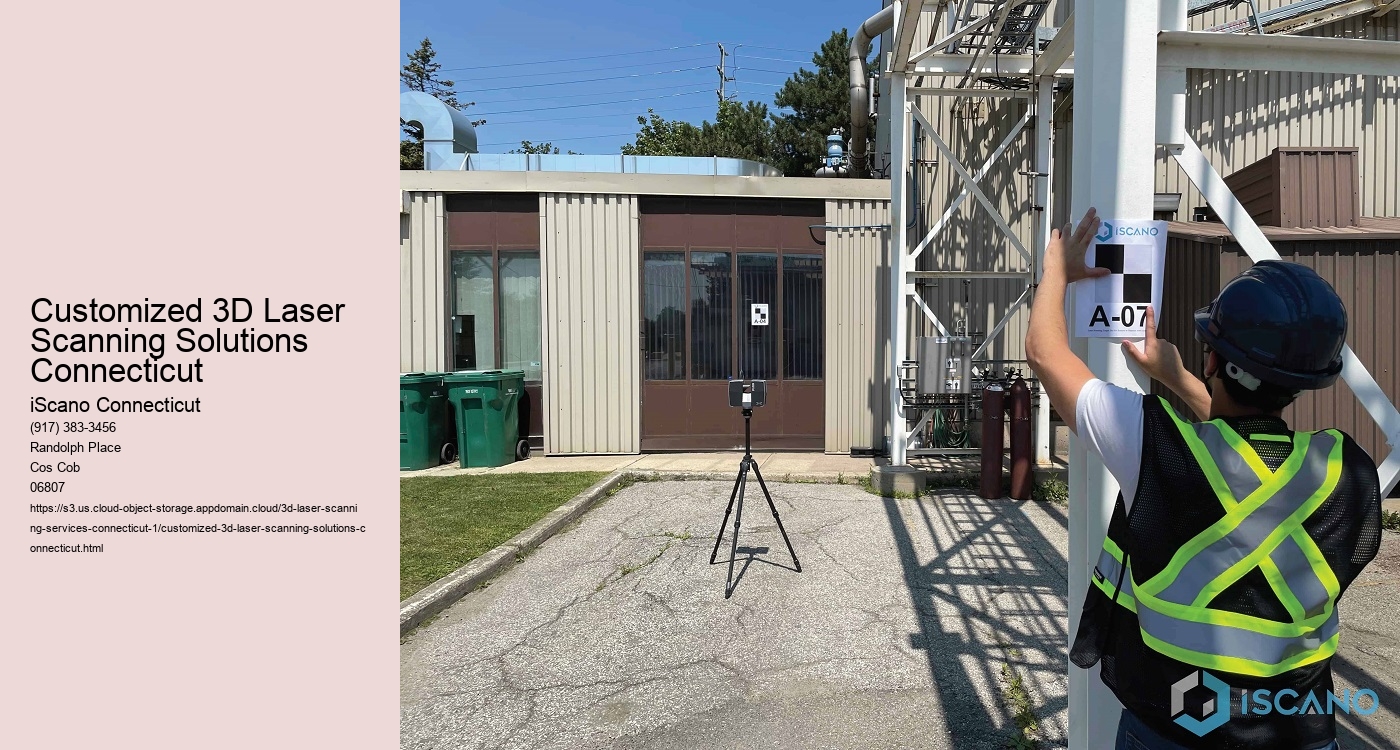
Revolutionizing Mapping and Surveying: 3D Laser Scanning Redefines Connecticut'' s Aesthetic Landscape Development in visualization has actually taken a huge leap forward with the development of 3D laser scanning technology. Customized 3D Laser Scanning Solutions Connecticut . This sophisticated device is changing the way we view and interact with our surroundings, specifically in the context of mapping and evaluating in Connecticut. With its unparalleled accuracy and effectiveness, 3D laser scanning is improving sectors and unlocking new possibilities for urban preparation, infrastructure advancement, heritage conservation, and a lot more.
Connecticut, with its varied terrain and rich cultural heritage, presents a myriad of obstacles and chances for visualization innovations. Conventional approaches of mapping and surveying usually battle to record the complex information of its landscapes and frameworks. Nevertheless, 3D laser scanning supplies a remedy that surpasses these limitations, offering extremely accurate and thorough representations of both all-natural and synthetic atmospheres.
Among the vital advantages of 3D laser scanning is its capability to capture data swiftly and non-invasively. By sending out laser pulses and measuring the time it considers them to return, scanners can generate precise three-dimensional designs of objects and landscapes with remarkable speed. This effectiveness is especially beneficial in Connecticut, where jobs frequently encounter limited deadlines and intricate terrain.
Furthermore, the degree of detail captured by 3D laser scanning is unmatched. From the intricate exteriors of historical structures in New Haven to the tough topography of the Litchfield Hills, every nuance is consistently duplicated in the resulting electronic versions. This level of fidelity not just improves the accuracy of mapping and checking efforts yet additionally supplies beneficial understandings for preservation and repair projects.
Along with its precision and performance, 3D laser scanning provides convenience that is unrivaled by standard approaches. Whether it'' s capturing the design of a building and construction website in Stamford or recording the problem of a bridge in Hartford, scanners can adapt to a wide range of environments and applications. This flexibility makes them important tools for engineers, engineers, excavators, and metropolitan coordinators across Connecticut.
In addition, the data collected via 3D laser scanning can be quickly integrated into various software platforms for additional analysis and visualization. By incorporating scan data with geographical details systems (GIS) or constructing info modeling (BIM) software, stakeholders can acquire deeper understandings right into spatial connections, determine possible issues, and make more enlightened choices. This combination is driving advancement in fields such as city layout, transportation preparation, and environmental management.
Past its useful applications, 3D laser scanning is likewise adding to the preservation and documents of Connecticut'' s social heritage. By electronically capturing historical sites, monuments, and artefacts, scanners are creating virtual archives that can be accessed and researched for generations to find. This not only aids to secure these important cultural assets but additionally supplies researchers with invaluable sources for research and analysis.
Nonetheless, despite its numerous advantages, the extensive fostering of 3D laser scanning in Connecticut is not without difficulties. Expense factors to consider, technical competence, and information monitoring issues are just a few of the aspects that organizations need to browse when applying scanning tasks. In addition, the rapid pace of technological technology implies that professionals have to frequently upgrade their abilities and devices to remain ahead of the curve.
Finally, 3D laser scanning represents a transformative innovation in visualization that is reshaping the method we view and connect with our setting. In Connecticut, this technology is opening brand-new opportunities for mapping, evaluating, and cultural heritage conservation, while additionally driving advancement in a large range of sectors. As the modern technology continues to evolve, its potential to change visualization in Connecticut and past is basically infinite.